


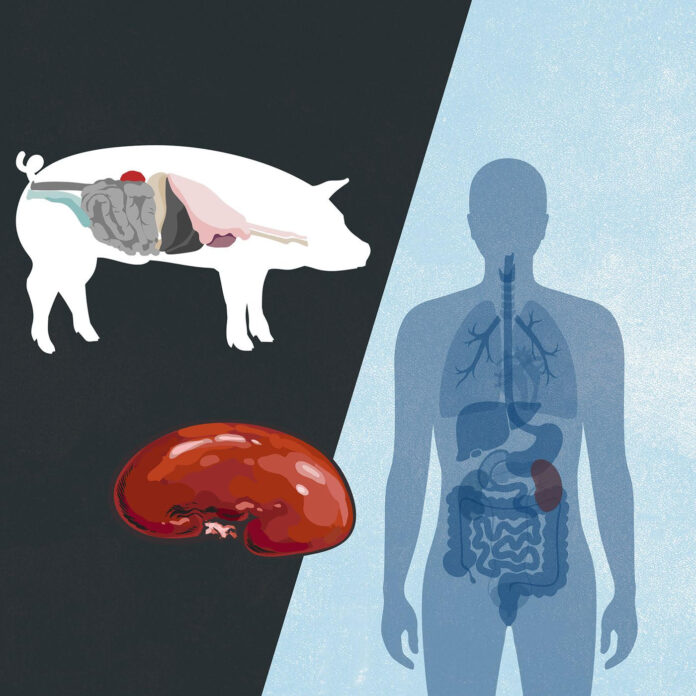
Another momentous and revolutionary step has been taken in the history of medicine, potentially marking the beginning of the end for the global organ donation crisis. In China, at the Second Affiliated Hospital of Guangxi Medical University, a team of surgeons performed the world’s first multi-organ xenotransplantation. This high-tech procedure involved the simultaneous transplantation of two genetically modified pig kidneys and an entire liver into a human body. This unprecedented experimental procedure was conducted on a 53-year-old man who was in a state of brain death following a cerebral hemorrhage and had severe chronic kidney disease. To support medical progress, the patient’s family granted full consent for participation in the study.
Xenotransplantation, which refers to the transplantation of organs, tissues, or cells from one biological species to another, has been considered the realm of science fiction for decades. The main barrier that previously made the functioning of animal organs in the human body impossible is the immediate and extremely aggressive response of the human immune system. Upon detecting a foreign body, the organism initiates an acute rejection, which leads to thrombosis, vascular damage, and organ death within a matter of minutes or hours.
To overcome this barrier, scientists utilized cutting-edge genetic engineering, specifically CRISPR technology. The donor animal was not an ordinary pig; it underwent six specific genetic modifications. Researchers deactivated three pig genes responsible for provoking acute immune rejection in the human body. Concurrently, three human genes were inserted into the DNA structure, granting the new organs greater compatibility with the human circulatory and immune systems.
The post-operative dynamics provided scientists with unique scientific data and great hope. The transplanted organs functioned successfully inside the human body for nearly five days, allowing doctors to observe their performance in real time. The genetically modified liver began producing bile just 19 hours after the surgery, which is a direct proof of its functional viability. At the same time, the pig kidneys began working effectively, bringing the filtration levels of toxins and waste products in the patient’s body back to a normal range.
Despite this success, the procedure also highlighted the challenges that scientists still face. Approximately 36 hours after the operation, the body began to show early signs of organ rejection. Human immune cells started replacing the pig cells, and minor damage along with blood clot formation was recorded in the liver tissues. However, the organs continued to function, demonstrating that more powerful and specific immunosuppressive therapies must be developed before widespread clinical practice can begin.
This achievement is particularly significant given the catastrophic shortage of organ donors worldwide. In the United States alone, more than 100,000 people are on waiting lists, and approximately twelve of them die every day without ever receiving a suitable kidney or liver. Pigs are considered the best alternative to solve this crisis because the size and anatomy of their organs are remarkably similar to those of humans, they reproduce quickly, and managing their population is much simpler. This multi-organ transplant in China builds on other recent successful experiments, such as the transplantation of genetically modified pig hearts into living patients and the multi-week functioning of pig kidneys in brain-dead donors.
In the future, before xenotransplantation becomes routine medicine, scientists must resolve the risks of long-term immune reactions, prevention of blood clots, and the transmission of animal endogenous viruses to humans. In addition, the ethical side associated with the mass breeding of genetically modified animals for medical purposes requires extensive medical and social discussion. Despite these challenges, leading transplantologists agree that this experiment is a massive leap forward, bringing us closer to a reality where thousands of people will no longer have to wait for years or risk their lives hoping for survival.
