


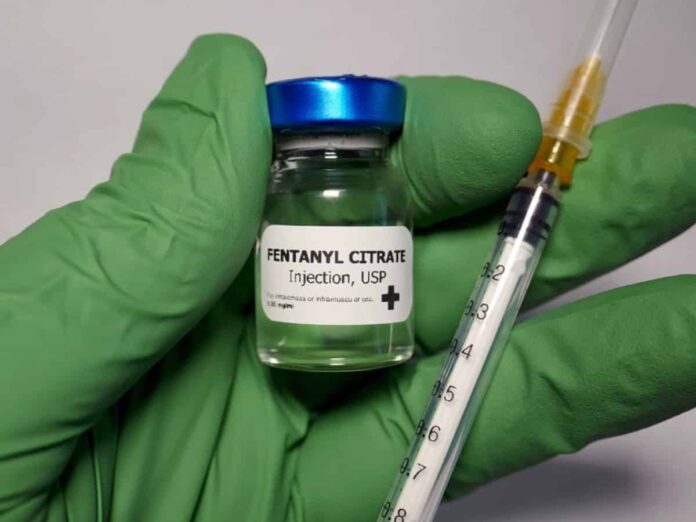
According to the latest research published in recent reports from the Scripps Research Institute and the Journal of Medicinal Chemistry, scientists have achieved a major breakthrough in the fight against drug addiction and synthetic opioid overdose. A team of researchers has developed an innovative experimental vaccine capable of protecting the human body from fentanyl and its numerous, even more lethal modifications (so-called “designer drugs”). This approach fundamentally changes the existing paradigm of addiction treatment and survival because, unlike traditional methods, it tackles the problem before the substance reaches the central nervous system rather than after the consequences have already occurred.
Every year, synthetic opioids, particularly fentanyl, claim more lives than car accidents and gun violence combined. A high dose of fentanyl suppresses the areas of the brain responsible for regulating respiration, which ultimately leads to asphyxiation and instantaneous death. Until now, the only effective emergency response was the use of naloxone, which blocks the action of opioids at the receptor level; however, it has a short-lived effect and often fails to cope with new, ultra-potent analogs of fentanyl. The new vaccine from Scripps Research is based on a completely different, immunological principle.
The project’s lead researcher, Dr. Kim Janda, and his scientific team have been working in this direction for years. Initially, they created a modified fentanyl molecule that retained its analgesic properties but was stripped of its dangerous side effects. In the scope of the new study, scientists linked this modified molecule to a specific carrier protein and tested the resulting formulation as a vaccine. Synthetic opioids, due to their small size, are typically invisible to the human immune system; however, the combination with the protein gave the body a signal to start producing specific antibodies.
During the research, the scientists encountered a major surprise: the immune system did not require an exact structural match of the drug to create antibodies. Instead of a specific chemical formula, the body learned to recognize a general molecular “fingerprint” common to the entire class of fentanyls. This property, which the scientists termed pan-specificity, gave the vaccine unique power. The generated antibodies bind and intercept with high precision not only standard fentanyl but also its highly dangerous variants such as carfentanil, acetylfentanyl, furanylfentanyl, and “China White.”
Animal testing confirmed the unprecedented efficacy of the vaccine. Mice that underwent the full course of vaccination maintained completely normal respiration even after being injected with doses of fentanyl that would normally cause instantaneous death. Biochemical analysis showed that the concentration of fentanyl in the brains of vaccinated subjects was approximately seventy percent lower compared to the control group that did not receive the vaccine. The antibodies act as a sort of sponge in the circulatory system; they capture the drug molecules, increase their size, and physically prevent them from crossing the blood-brain barrier and binding to brain receptors.
It is also noteworthy that the generated antibodies are highly selective. They react only to compounds of the fentanyl group and do not interfere at all with other widely used medical opioids such as morphine or oxycodone. This means that if a vaccinated patient requires scheduled surgery or pain management with standard clinical medications in the future, the vaccine will not hinder their therapeutic effect. Furthermore, it does not block naloxone itself, providing an additional safety guarantee in extreme situations.
Although several years remain before clinical practice and testing on humans, the public health potential of this platform is colossal. Scientists anticipate that the vaccine will become a revolutionary tool in rehabilitation programs for individuals trying to avoid fatal outcomes caused by relapse. In addition, it will serve as a reliable defense mechanism for first responders, medical personnel, and law enforcement officers who work daily in high-risk environments and often fall victim to accidental poisoning from fentanyl vapor or dust. This discovery opens a new chapter in the history of immunofarmacotherapy and offers humanity a real chance to defeat one of the most brutal epidemics of the century.
