


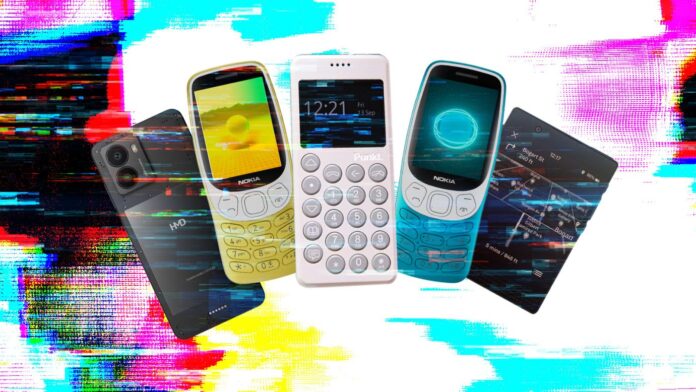
In the modern era, the smartphone is no longer just a means of communication; it has evolved into a neuropsychological tool that constantly impacts the human dopamine system and cognitive functions. Recently, the “Digital Minimalism” movement has become increasingly relevant in the United States and Europe, directly linked to health specialists’ concerns regarding the negative impact of screen time.
Research confirms that smartphone addiction is directly proportional to sleep quality, mental health, and overall psychological well-being. In response to these challenges, a new generation of minimalist devices, known as “dumbphones,” has emerged in the tech market. These aim to prevent attention deficit and escape the paradigm of the “Attention Economy.”
This movement is particularly interesting for Gen Z, a generation that grew up in the era of algorithms and now suffers most acutely from social media-induced anxiety. New minimalist smartphones, such as the Light Phone III or devices equipped with E-ink displays, intentionally create certain barriers for the user.
These models rely on the deliberate creation of “neuropsychological friction” to weaken the dopamine dependency formed by smartphones. Due to its low refresh rate and lack of color, E-ink technology makes the perception of dynamic visual stimuli physically impossible.
This approach effectively “switches off” the brain’s reward system and its impulsive response circuits. Such alienation from the screen and the presence of functional barriers force the user to shift from passive consumption to intentional behavior, significantly reducing cognitive overload and facilitating the restoration of mental resources.
The goal of this concept is to transform technology into a passive instrument that no longer demands constant and impulsive engagement. Some models, like HMD’s new Fusion series, go even further, making it physically possible for parents to gradually unlock digital features for children, thereby fostering healthy technological habits from an early age.
From a medical and social perspective, a complete digital detox presents serious challenges in the modern world. Today, healthcare systems, education, and government services are tightly integrated into smartphones, making a total transition to minimalist devices nearly impossible.
Consequently, many specialists see the solution in a hybrid approach: functionally limiting smartphones and transforming them into “dumbphones”—for example, by switching the screen to grayscale mode or keeping only essential applications.
Ultimately, this trend suggests that future technological progress will focus not on a feast of features, but on the preservation of human mental resources and privacy. While innovation previously meant merely adding new capabilities, today the priority is the user’s mental health and protection from information noise.
Innovation will no longer be measured by how much of our time a device consumes, but by how effectively it helps us maintain concentration and protect our mental well-being.
