


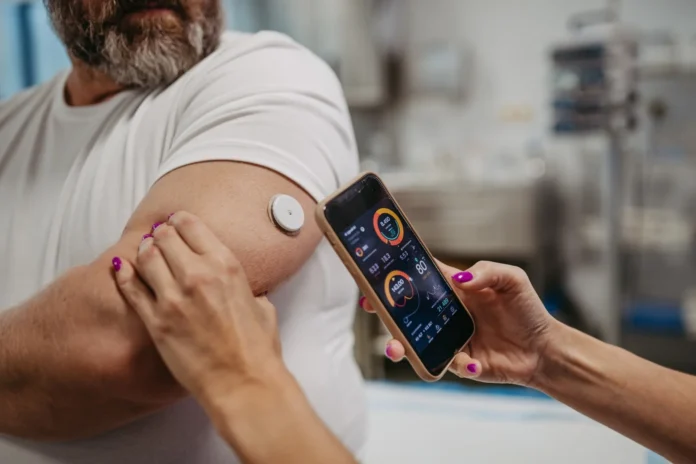
Scientists at Washington State University (WSU) have developed an innovative biosensor designed to make wireless glucose monitoring more accurate, affordable, and less invasive for individuals living with diabetes.
According to the study published in the journal The Analyst, the new device measures sugar levels in interstitial fluid using microneedles and transmits data to a smartphone in real time.
The device’s high sensitivity is driven by the use of “single-atom catalysts” and enzymatic reactions known as nanozymes. This technology allowed researchers to amplify the signal and create a more compact, smart sensor capable of detecting even minimal amounts of biomarkers.
Unlike existing continuous glucose monitoring (CGM) systems, where chemical processes occur under the skin and often cause irritation or rashes, the WSU sensor is far more reliable for the user. Its operating principle is based on 3D-printed hollow microneedles that are less than one millimeter in length.
In contrast to traditional methods, where the chemical reactions required to detect sugar levels take place directly beneath the skin—frequently leading to tissue irritation or inflammation—this new device moves the entire testing process outside the body. The system utilizes hollow microneedles that penetrate only the superficial layer of the skin without reaching nerve endings. This minimizes the risk of toxicity and inflammatory processes for the patient.
The new technology is also economically advantageous. The use of 3D printing significantly reduces production costs. According to projections, the continuous glucose monitoring market in the U.S. is expected to grow from $7.2 billion in 2024 to $26.8 billion by 2033. This factor points to the high commercialization potential for such innovations.
At this stage, the scientists have already filed a patent application and are planning to test the device on animals. The research team is also working on expanding the sensor’s capabilities to allow the technology to identify several different biomarkers simultaneously. The project authors aim to make high-tech sensors a practical and accessible part of daily healthcare.
