


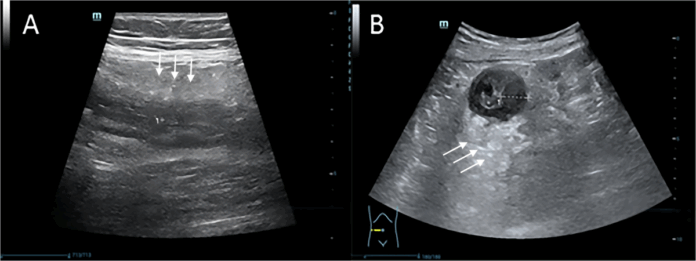
Crohn’s Disease (CD) is a chronic inflammatory disease of the gastrointestinal tract that is often complicated by fibrosis(tissue scarring), strictures (narrowing of the intestinal lumen), and fistulas (pathological connections between hollow organs). These complications significantly worsen a patient’s quality of life and require accurate diagnostic monitoring for optimal treatment planning. New research highlights the clinical significance of an innovative ultrasound method—Virtual Touch Tissue Imaging and Quantification (VTIQ)—which makes it possible to assess the stiffness and fibrosis of the intestinal wall, providing a safer, faster, and more accurate diagnostic alternative compared to traditional methods (CT, MRI, and endoscopy).
Traditional visualization for Crohn’s disease has drawbacks: CT and MRI are expensive. CT also requires ionizing radiation, so these methods may not be recommended for all patients. As for endoscopy, it is excellent for assessing superficial mucosal damage but does not provide information on deep structural changes in the intestinal wall.
In contrast, VTIQ ultrasound is a non-invasive method that provides real-time information about tissue stiffness, which is needed to assess fibrosis and strictures. This allows clinicians to more effectively differentiate fibrosis from inflammation, which is a crucial factor for selecting the correct therapy and avoiding unnecessary surgical interventions.
Study Details:
The study analyzed data from 63 patients with the active phase of Crohn’s disease using the Mindray Resona R9T ultrasound system. Researchers focused on measuring Shear Wave Velocity (SWV) and Young’s Modulus—these two parameters are indicators of intestinal tissue stiffness. The obtained indices were compared with the endoscopic “gold standard” (SES-CD score), which is used to assess the severity of stenosis. The accuracy of all results was confirmed by expert radiologists.
Shear Wave Velocity was found to be the strongest prognostic marker for intestinal stenosis, with a high diagnostic accuracy (AUC 0.838).
Young’s Modulus and IBUS-SAS score (which assesses structural changes and blood circulation in the intestinal wall) were also significant prognostic factors.
By jointly using these ultrasound indicators, the diagnostic accuracy was further increased (AUC 0.878). This combination fully confirmed the reliability of endoscopy in detecting stenosis and significantly improved the non-invasive detection of the disease.
False-negative results were also identified, which are linked to technical difficulties (such as the presence of gas in the intestine or the depth of the lesion). This indicates that the use of additional visualization methods is still necessary in some cases.
Accuracy may be affected by factors such as obesity, the location of the lesion, and operator qualifications; moreover, the interpretation of some scans is complicated by anatomical features or severe peristalsis.
Future Research Directions Should Focus on:
Expanding the research samples and multicenter studies.
Improving ultrasound technology for better visualization of complex cases and deep tissues.
Integrating VTIQ with Artificial Intelligence (AI) algorithms and other visualization methods, which will make the diagnosis more accurate.
Standardizing practitioner training and quality control to reduce the variability of results.
Source: Insights into Imaging
