


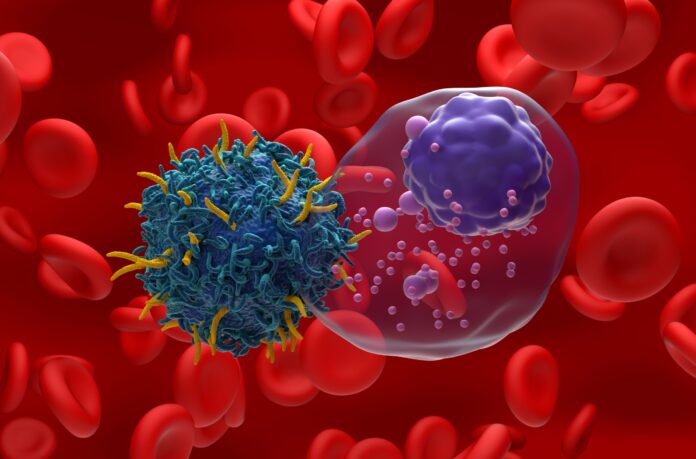
A medical team at the University Hospital Erlangen, led by Professor Fabian Müller, has achieved unprecedented success: using CAR T-cell therapy, they completely cured a patient suffering from three different severe autoimmune diseases. This case is exceptional as it marks the first time multiple autoimmune pathologies have been effectively managed simultaneously using a single therapeutic approach.
The patient’s history began over a decade ago during pregnancy, when immune system dysfunction led to the gradual development of three conditions: autoimmune hemolytic anemia—a condition where the body destroys its own red blood cells; immune thrombocytopenia—a decrease in platelets involved in blood clotting; and antiphospholipid syndrome (Hughes syndrome)—a disorder where the immune system attacks normal proteins in the body, leading to blood clots in arteries and veins.
The combination of these pathological processes brought the patient to a critical threshold: the simultaneous breakdown of erythrocytes and destruction of platelets was occurring, accompanied by a growing risk of thrombosis. Standard immunosuppressive therapy proved insufficient, and the patient regularly required blood transfusions and anticoagulant treatment.
After years of ineffective treatment, the patient turned to Fabian Müller’s team, pioneers in treating autoimmune diseases with CAR T-cell therapy who have been systematically publishing clinical results since 2022. The method is based on extracting the patient’s T-lymphocytes and subsequently modifying them genetically in a laboratory. A Chimeric Antigen Receptor (CAR) is integrated into the cells, enabling the modified cells to recognize and purposefully destroy specific pathological targets. In this case, the targets were the B-lymphocytes producing the pathological antibodies. Once the modified CAR T-cells were reintroduced into the body, they effectively eliminated the B-lymphocytes.
The results of the therapy were impressive: just one week after treatment, the patient was able to get out of bed, and within a few months, full clinical remission was observed. After 11 months, the patient no longer required additional treatment and was assessed as functionally healthy. Notably, the therapy did not cause total destruction of the immune system; both unmodified T-cells and long-lived plasma cells—responsible for immunity gained from prior infections and vaccinations—were preserved.
Additionally, a significant immunological phenomenon was observed: after a certain period, the body recognized the CAR T-cells as “foreign” and eliminated them, which was followed by the formation of entirely new, healthy B-cells.
Although CAR T-cell therapy was originally developed to treat cancer, it has shown significant promise in treating a wide spectrum of autoimmune diseases, including lupus and multiple sclerosis, as well as severe asthma. While CAR T-cell therapy in oncology is often associated with serious side effects, such complications are relatively rare in autoimmune cases. This difference is likely due to the fact that autoimmune pathologies require the destruction of fewer target cells, thereby reducing the risk of a strong systemic inflammatory response.
Despite this progress, caution is necessary when formulating final conclusions. Assessing the long-term effectiveness of the therapy and the possibility of relapse requires extended observation and large-scale clinical trials.
