


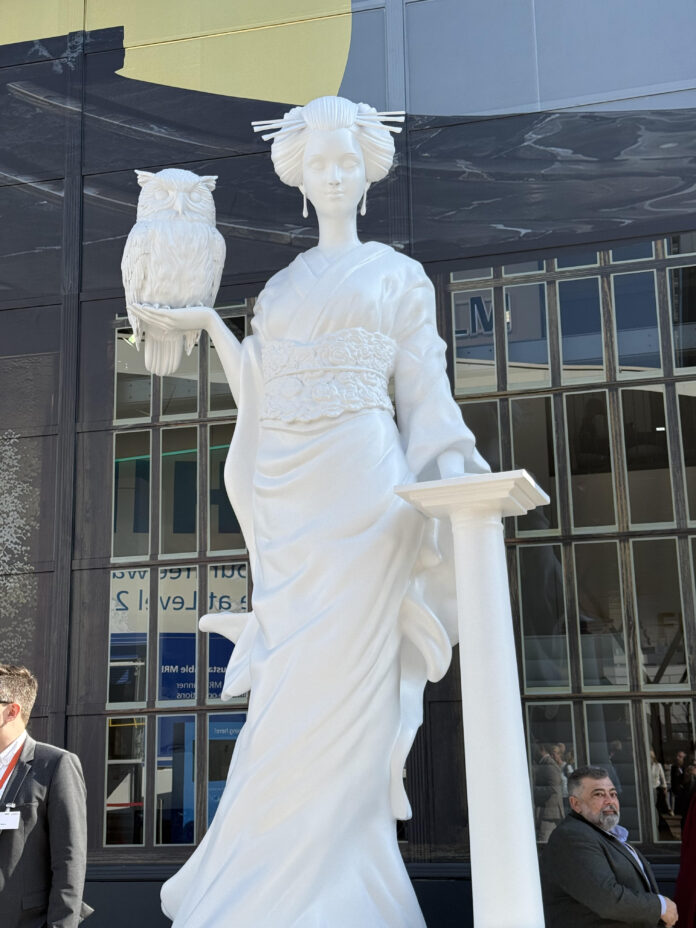
This year, Vienna once again hosts the European Congress of Radiology (ECR 2026). It is one of the largest radiological conferences in the world, where approximately 20,000–30,000 specialists participate annually, and thousands of scientific papers and discoveries are presented. The forum, unprecedented in its scale and content, proved to be particularly busy this year for the Georgian delegation. Mr. Grigol Nemsadze, Associate Professor at Tbilisi State Medical University and radiologist at the First University Clinic and N. Kipshidze Central University Clinic, speaks to us from Vienna about the importance of the congress and modern challenges.
The Importance of the Congress and Georgia’s Role
At the beginning of the interview, Mr. Grigol assessed the general atmosphere of the forum and the benefits such a large-scale event brings to the Georgian medical field.
What are your thoughts on this congress, what is its significance, and what does it generally bring to Georgia?
“The forum is truly impressive and informative. Today is the third day of the congress, and we have attended quite interesting reports. We have learned a lot of new things and been introduced to many of the latest and most interesting technologies that would simplify the lives of both the average radiologist and the patient. Today, Georgia is considered a leading country in terms of acquiring and mastering the latest technologies; therefore, such workshops and exhibitions are doubly interesting for our healthcare sector. The technologies we see today will undoubtedly be presented in Tbilisi tomorrow. Thus, it is essential to get acquainted with, view, and test them in a timely manner so that we have the appropriate knowledge for future interaction with them.
Furthermore, as you know, many of our Georgian colleagues presented reports here. Our team alone had 8 presentations. Besides us, there are many workers from the Todua Clinic, and numerous radiologists from ‘New Hospitals’ who have presented their own reports. This is a very positive development for the Georgian side—for gaining experience, sharing interesting Georgian cases, and most importantly, getting to know our Georgian colleagues’ achievements in more detail, which I only welcome.”
Technological Breakthrough: From Horizontal to Vertical
Hundreds of innovations were presented at the congress, but a professional’s eye always looks for the exceptional.
You mentioned new technologies, Mr. Grigol. I personally lost count of the latest discoveries and devices I had the chance to see. Which one stood out to you particularly?
“The most interesting and innovative is probably Canon’s vertical tomography, and we can discuss it in this context. There are many new things, of course, especially in terms of software, which makes the process of operating even on old machines much easier and faster for a radiologist. But technologically, the newest and most striking for me was likely this. It’s as if the orientation has changed and this research method has moved to a fundamentally new stage. It was horizontal, and now it has become vertical; it is different with its many positive advantages. Time will tell, and we shall see how it works in practice—I will observe it with great interest.”
Artificial Intelligence and the Future of Radiology
When talking to experienced radiologists, we cannot bypass the topic of Artificial Intelligence (AI), which is becoming an integral part of medicine today.
You are likely one of the professionals with the longest and most diverse experience in Georgia. How do you view the issue of Artificial Intelligence? How is it replacing the work of a radiologist, considering you remember the period when AI physically did not exist?
“Yes, it’s not surprising; during my career, I’ve probably seen everything. The stage of active operation in my field started with ‘crazy tomography’ [early scanners], and today we are already operating with a 640-slice CT scanner equipped with artificial intelligence. You know, it helps us quite a bit. First, it is amazingly useful in obtaining the most accurate image possible with a minimum dose of radiation. To say that it has taken the initiative in making diagnoses and that we write based on it—that is not the case, and I don’t think it ever will be. It simply allows us to process information faster and search more quickly than before; in other words, it saves us a great deal of time. Many of our surgical colleagues use our images, and there it might have a consultative role to quickly create a small representation, but in diagnostics, it doesn’t have that kind of accuracy. Of course, that function is ours from beginning to end.
In the context of mastering new technologies and knowledge: if we, the radiologists, know how to ask the question correctly, we will receive answers more quickly and efficiently. For me, the contrast is clear: before, you had to search for an answer on Google, or even further back in my youth, you had to go to the library and read there, where you wouldn’t find much even about computed tomography. Now, this provides a huge service to our young colleagues.”
In your opinion, will Artificial Intelligence replace the field of radiology?
“Clearly no. Otherwise, we would have come here in vain. It would mean telling our younger generation—the many talented and promising young people interested in this field who work hard at the university and later in residency programs—that their work makes no sense. This is not the case. A computer can in no way remove the human factor; it is impossible. It is easy now to say that no one knows what will happen in the future, but by that same logic, it could replace jurisprudence and judge people itself. However, if you don’t leave a person responsible for an error, the field has no future—you can’t hold IT specialists and engineers accountable at that moment. I would say it will help us and ease our labor for a very, very long time, making it more fun and interesting, and perhaps taking us out of the routine. That is all.”
Georgian Radiology on the World Map
If we compare the fields of Georgian and European radiology, where are we now—in the region, on a global scale, and overall, are we making progress?
“In the region, I would say we hold a leading position. We are very far ahead compared to our neighbors, and closing this gap will not be an easy task for them. As for Europe, we don’t have bad results here either. On the contrary, we also occupy one of the leading positions. To explain it simply, even the data from this conference is enough: 8 presentations from our department, and approximately the same amount from other clinics—so we are on par. When such an influential and important organization accepts 8 out of 12 sent presentations, it means our level of trust is very high. People trust us, and the data we present determines diagnostic strategies. This already means that Georgia has taken its rightful place in European medicine. We are definitely in the top ten. Georgians are considered quite weighty and influential specialists here, which is why we are one of the most numerous countries in terms of represented delegates.”
Through my eyes as a correspondent, this congress felt somehow different. It is very difficult not to notice the group of Georgian delegates from afar among thousands of unknown faces. They seemed more distinct, more vibrant, and yet more organized—people who know exactly why they are at an event of this scale and yield to no one in their thirst for sharing and receiving knowledge. The ECR will gradually publish the presentations of the Georgian delegates on its page, where we will have the opportunity to get acquainted with them in more detail. Until then, we can simply be proud of the people who, through their enthusiasm and despite scarce resources, still manage to represent the country’s name worthily on the international stage.
