


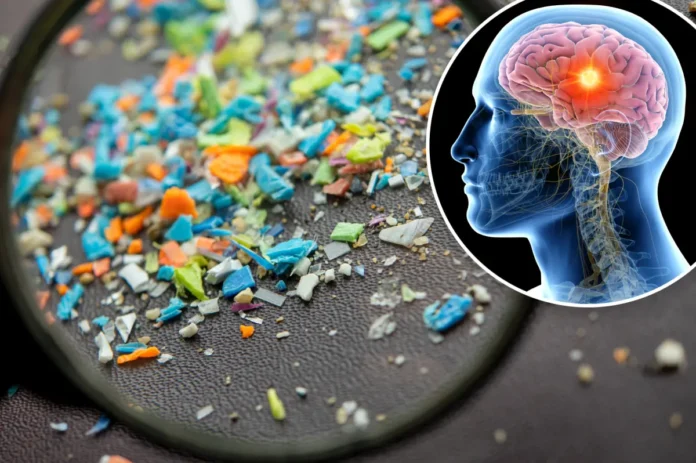
A systematic analysis conducted by researchers at the University of Technology Sydney (UTS) and Auburn University indicates that microplastics may contribute to the aggravation of Alzheimer’s and Parkinson’s diseases.
More than 57 million people worldwide live with dementia, and a sharp increase in cases of these neurodegenerative diseases is expected. According to the new study, published in the journal Molecular and Cellular Biochemistry, the potential for microplastics to accumulate in the brain poses a significant public health threat.
Scientists estimate that an adult person consumes approximately 250 grams of microplastics annually, which is enough to cover the surface of a dinner plate.
As Associate Professor of Pharmaceutical Science at UTS, Kamal Dua, explains, the sources of microplastics are diverse: contaminated seafood, salt, processed foods, plastic bottles, and tea bags, as well as plastic fibers released from synthetic fabrics and dust. Studies show that microplastics accumulate in various organs, including the brain.
The scientists identified five main mechanisms by which microplastics may damage the brain:
-
Stimulation of Immune Cell Activity: The body views microplastics as a foreign aggressor, which prompts the brain’s immune cells to fight against it.
-
Disruption of the Blood-Brain Barrier (BBB): “Microplastics weaken the blood-brain barrier, making it permeable. Subsequently, immune cells and inflammatory molecules are activated, which further damages the barrier cells,” says Professor Dua.
-
Generation of Oxidative Stress: Microplastics increase the amount of unstable molecules (Reactive Oxygen Species) and weaken the body’s antioxidant system, leading to cell damage.
-
Mitochondrial Damage: Plastic particles hinder mitochondria (the cell’s “powerhouses”) from producing energy (ATP). This energy deficit weakens neuronal activity and ultimately damages them.
-
Direct Neuronal Damage: Ultimately, as a result of these interacting pathways, damage in the brain increases.
The paper also discusses specific mechanisms through which microplastics may be linked to Alzheimer’s and Parkinson’s. In the case of Alzheimer’s, this is the stimulation of beta-amyloid and Tau protein accumulation; and in the case of Parkinson’s, it involves the aggregation of $\alpha$-synuclein and the damage to dopaminergic neurons.
While the scientists note that further research is needed to prove a direct cause-and-effect relationship, they urge the public to reduce their contact with microplastics.
