


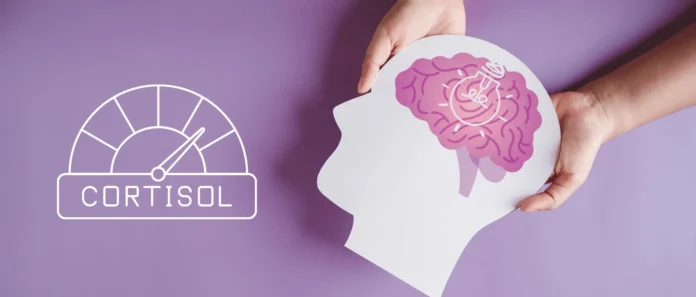
Researchers at Leiden University in the Netherlands have conducted a significant study that sheds light on how stress affects the brain and how it contributes to the development of mental health conditions such as anxiety and depression.
The primary focus of the study is cortisol—the stress hormone released by almost all vertebrates during times of danger or tension. At a biological level, when responding to stress, cortisol binds to two specific proteins in the brain: mineralocorticoid (MR) and glucocorticoid (GR) receptors. These proteins typically pair up to form units called dimers.
The researchers discovered that “heterodimers”—pairs consisting of one MR and one GR receptor—are of particular importance. Until now, the impact of this specific combination on stress-related behavioral changes remained unknown to scientists.
What did the study show?
To investigate this mechanism, scientists used zebrafish, as monitoring their brain and behavior is scientifically straightforward and efficient. Using genetic engineering, they created receptor mutations that ensured the formation of only certain types of pairs. The experiment revealed that cortisol only altered the behavior of the zebrafish when the MR and GR receptors bound together to form heterodimers.
It was established that these combined pairs regulate the genes responsible for information exchange between different regions of the brain. Specifically, they affect the glutamatergic system, which facilitates the transmission of excitatory signals in the brain. Changes in this process, in turn, influence other vital neurotransmitters, ultimately manifesting as stressful and anxious behavior.
How will this discovery help treat anxiety and depression?
These findings offer a new perspective on the treatment of mental health disorders. If this mechanism is confirmed to function similarly in humans, it will allow scientists to develop alternative therapeutic methods.
New medications could purposefully target the specific stress signaling pathways identified in this study, making the treatment of anxiety and depression more effective.
