


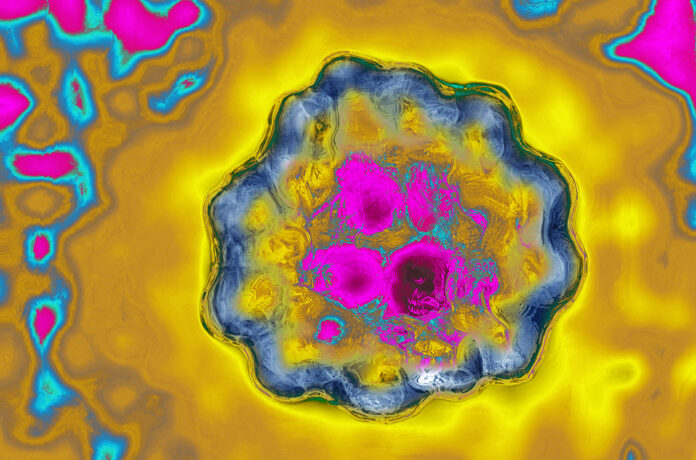
A team of scientists from the Wellcome Sanger Institute, Oxford, Cambridge, Melbourne, and Kyiv Academic University has, for the first time, encoded the full genome of the Hepatitis D virus into a quantum computer. The process was carried out using the quantum circuits of IBM’s latest 156-qubit Heron processor. The researchers developed algorithms for compressing DNA sequences and efficiently converting them into quantum states. As a result, the 1,700 RNA bases of the Hepatitis D virus were mapped onto just 117 qubits.
This achievement could have significant applications in pangenomics. Pangenomes represent the collection of genomes from members of the same species or genus, reflecting the genetic diversity across different populations. Pangenomics aims to visualize and analyze the genetic diversity, similarities, and differences within a species. However, the simultaneous analysis of multiple genomes is an extremely complex computational task for classical systems. Successful quantum coding of a genome is an essential prerequisite for harnessing the potential of quantum computing in disease monitoring, genetic research, and mutation analysis.
“Our goal has always been to expand the possibilities of genomics. When working with pangenomes, information is presented as a complex labyrinth. The quantum algorithms we have created help us find the optimal path through this labyrinth where classical computing systems lose efficiency. Our mission is to bring about fundamental changes in the world of genomics by integrating quantum computing,” noted Sergii Strelchuk, Associate Professor at the University of Oxford’s Department of Computer Science and Technology.
The research was conducted under the Wellcome Leap “Quantum for Bio” program, which focuses on implementing quantum technologies in biology and healthcare. The project is large-scale and multidisciplinary, with a total funding of up to $40 million allocated to the participating research institutes.
The scientists have already published a preprint of their paper, which describes the quantum algorithms required to assemble pangenomic data.
According to the researchers, while encoding the human genome (3.2 billion base pairs) into quantum systems remains a distant prospect, this achievement represents a crucial milestone toward that strategic goal.
