


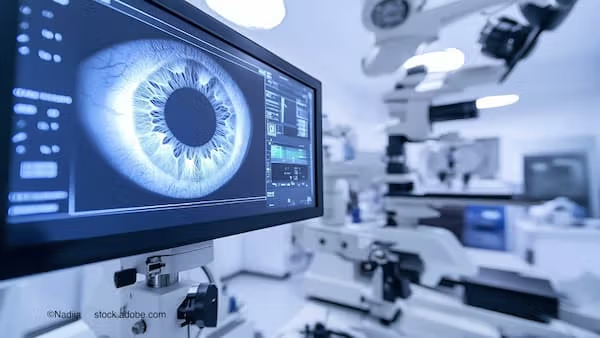
In modern ophthalmic surgery, glaucoma procedures significantly lag behind cataract surgeries in terms of predictability. While optical biometry in cataracts guarantees an almost perfect refractive outcome, glaucoma interventions remain “blind” to the dynamics of fluid outflow. Surgeons measure intraocular pressure only before the operation and after the procedure is completed, which leaves the critical changes occurring during the intervention itself out of sight.
This data uncertainty directly reflects the low effectiveness of treatment. Statistically, more than half of patients who undergo trabeculectomy or drainage implantation do not achieve full therapeutic success. Since complications often manifest only during postoperative visits, timely clinical response becomes significantly more difficult. The absence of biometric feedback creates a sharp contrast with the 95% accuracy of cataract surgery, which gives rise to the necessity of implementing new, more precise standards for glaucoma management.
In response to this clinical challenge, Mount Sinai researcher Sean Ianchulev created miDOC technology. During the course of surgery, the system measures the dynamics of eye fluid in continuous mode and assists the surgeon in decision-making with real data.
Integrating Digital Biometry into the Surgical Process
The miDOC system, created at Mount Sinai’s New York Eye and Ear Infirmary (NYEE), monitors four fundamental parameters in continuous mode during surgery. The technology measures intraocular pressure and aqueous humor dynamics in real time, which gives the surgeon the means for process management and instantaneous correction. Along with this, the system evaluates the functioning of the trabecular meshwork and tissue reaction (rigidity) to the intervention live, which was previously practically impossible.
Dr. Ianchulev compares this breakthrough to the optical biometry implemented in cataract surgery. According to his explanation, miDOC introduces a level of precision to glaucoma treatment that did not exist in medical practice before. The mentioned technology turns surgical intervention from an intuitive approach into a data-driven, high-tech process.
First Successful Interventions in Humans
The effectiveness of the technology was unequivocally confirmed by the country’s first clinical study conducted by NYEE. From July 2025 to the present, 20 surgeries were successfully completed, where each case proceeded under intraoperative biometric control.
The system’s high-precision feedback revealed nuances that remained completely invisible when using traditional methods. Receiving outflow data in real time created the possibility for the immediate optimization of surgical maneuvers. The mentioned results likely also explain the hidden reasons that determine the success or unexpected failure of standard procedures.
Beyond Glaucoma: New Horizons of Ophthalmological Diagnostics
Besides the management of glaucoma, miDOC technology creates new diagnostic possibilities in various directions of ophthalmological surgery. For example, during cataract procedures, a sharp increase in postoperative pressure is dangerous for vision even under conditions of perfect refractive results. The technology allows critical changes to be recorded directly during the surgery, which effectively protects the patient from subsequent complications.
In parallel, the system appears as a unique means for monitoring choroidal blood circulation. Since blood supply to the macula is decisive for visual acuity, the early detection of any deviation significantly eases the disease management process for retinal surgeons. In this manner, miDOC goes beyond the limits of traditional ophthalmology and establishes a standard of complex digital biometry in the field.
However, the system’s potential is not limited only to ophthalmological indicators. The technology reveals most important data regarding cerebrovascular, cardiological, and lymphatic physiology. The anatomical accessibility of the eye makes it an ideal platform for studying the entire vascular system.
Global Recognition
Dr. Ianchulev plans to achieve cataract-level results in glaucoma surgery through the implementation of digital guidance and biometric feedback. Currently existing procedures are often hindered due to unpredictable scarring and unstable pressure control. The live data provided by the miDOC system offers hope for the full standardization of the surgical process and high reproducibility of results.
The technology’s transformative potential is also indicated by its official debut. miDOC was presented to the public at the ASCRS Charles D. Kelman Lecture, which is reserved only for distinguished leaders of cataract and refractive surgery. The selection of the mentioned platform confirms the recognition of the system’s innovativeness and its strategic importance by professional circles.
Regulation and Commercialization
Currently, miDOC is at the research stage and does not yet possess FDA authorization. The system is undergoing a clinical refinement stage at NYEE, while Mount Sinai is simultaneously caring for the protection of intellectual property. The institution has already submitted patents where Doctors Ianchulev and Kamthan are named as co-inventors of the technology. Despite the fact that the licensing process has not yet been completed, the inventors expect significant benefits from the system’s future validation.
Broader studies planned for the future will confirm the technology’s effectiveness in various procedures and across a diverse population of patients. Following the successful completion of the mentioned stage, the submission of an official application to the regulatory body is planned. In the opinion of the project’s authors, commercial partnership can significantly accelerate the process of the system’s global implementation.
Source: Mount Sinai
