


For the first time, a donor heart was transplanted into a patient in the Caucasus region. The operation, performed in Azerbaijan, marked more than a national medical achievement: it established a new clinical possibility for patients across a region where heart transplantation had not previously been available.
The achievement was discussed at the International Heart Failure Tbilisi Forum, held on 25–26 September, where specialists from across the region and beyond gathered to consider the changing landscape of advanced heart-failure care. The forum provided an important setting for reflecting on what the procedure represents—not only for Azerbaijan, but for the development of transplantation and multidisciplinary heart-failure medicine throughout the Caucasus.
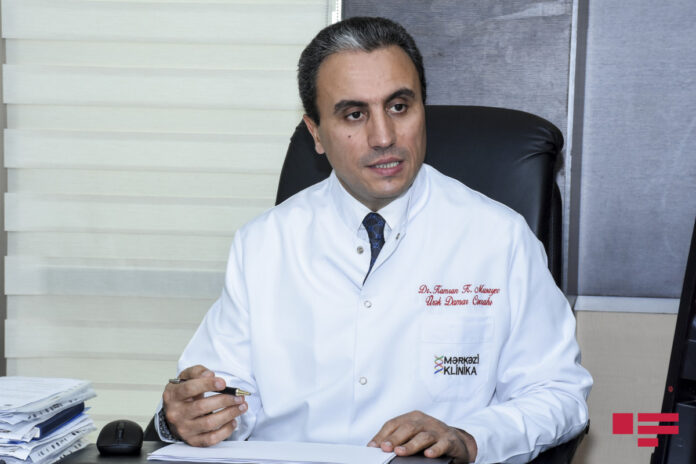
That moment was prepared over approximately 25 years. Kamran Musayev, MD, Director of the Central Clinic in Baku, describes how the foundations were assembled through advances in cardiovascular surgery, intensive care, ECMO, and mechanical circulatory support. Yet the clinical infrastructure was only one part of the undertaking. A transplant programme also requires specialized teams, a legal framework for organ donation, public acceptance, and families willing to consent to donation.
Today, we are discussing the historic significance of the first heart transplantation performed in the Caucasus region and why it took place only now. Could you explain the major barriers – both clinical and organizational – that you and your team had to overcome to make this procedure possible?
First of all, I would like to thank Professor Zviad Kipiani and you for this interview.
I would like to emphasize that heart transplantation is not only a surgical procedure. Some patients with heart failure – whom we refer to as patients with advanced heart failure – need more than standard treatment methods. These may include optimal medical therapy, device therapy, mechanical circulatory support, or artificial-heart therapy. Ultimately, some of these patients need heart transplantation as a definitive treatment.
Based on our current knowledge, heart transplantation is the best treatment for patients with advanced heart failure. As you know, this option was not previously available to patients in my country, Azerbaijan, in Georgia, or anywhere else in the Caucasus region. This was a major challenge, but it also became our motivation: we wanted to change the situation.
At my center, Central Clinic in Baku, we have provided advanced cardiovascular surgery, interventional cardiology, and intensive care since the early 2000s. We began using ECMO and Levitronix systems in 2008, and in 2013 we began implanting assist devices. These were not separate projects; they were the initial steps toward establishing a heart-transplantation programme.
As I said, heart transplantation is not just one surgery or a prestigious operation. If you want to start heart transplantation, you have to establish a sustainable heart-transplantation programme. Every country – including Azerbaijan, Georgia, and other countries in the region – needs to develop such a programme.
A national heart-transplantation programme has several components. Of course, each country has its own circumstances, but some requirements are universal.
The first is infrastructure. You need advanced clinics capable of providing cardiovascular surgery, open-heart surgery, advanced intensive care, and advanced cardiology. Why? Because heart transplantation requires a multidisciplinary team capable of providing successful care.
Second, you need a trained multidisciplinary team. You need cardiovascular surgeons with specific training in heart transplantation, as well as an advanced cardiology department, intensivists, anesthesiologists, nurses, and allied health professionals.
Third, you need a legal framework. You need appropriate laws and social acceptance. This includes religious, social, ethical, and reimbursement-related factors. All of these elements have to develop together.
If you establish these three components, you can begin performing heart transplantation.
For my country, this journey took approximately 25 years. After completing my residency training in Istanbul, Turkey, I returned to Baku and began working in my homeland. Over those 25 years, we succeeded in establishing a sustainable heart-transplantation programme.
The first heart-transplantation operation was performed in October 2025, approximately one year ago. As you mentioned, it was the first heart transplantation ever performed in the Caucasus region. However, I strongly believe that our initial experience can motivate and support the development of programmes in other centers – in Azerbaijan, Georgia, and other countries in the region. We are also ready to share our initial experience with our Georgian colleagues.
I would also like to address one of the most essential aspects of heart transplantation, because there are two sides to the process. On one side, there is the recipient, whose life may depend on a transplant. On the other hand, there is the donor and the donor’s family. We have already mentioned the ethical aspects, but I would like to ask specifically about the donor’s family in your case. It is not easy to agree to donate a loved one’s heart, and social stigma still exists. What was the situation in your country, and has this successful procedure changed it?
You are absolutely right. You have raised a core question about the entire transplantation process.
Of course, you want to perform a transplantation operation for a recipient, but you need a donor. Our first case taught us – and taught me personally – several lessons. The most important was the difficulty of finding donors.
By the way, I can say that, since then, we have performed three additional heart transplantations. With each of our initial operations, we learned that the biggest and most difficult challenge concerned organ donation.
We are currently using donors after brain death. However, in my country, the legal framework requires the patient’s family to give consent. Before families can accept donation, there must be broader social acceptance of organ donation, and this is not easy to achieve.
Our geographic and social circumstances are similar. Georgian and Azerbaijani societies are very close in many ways. But I believe that, if we want to change things – particularly the challenges related to transplantation – we can achieve positive results. Azerbaijan’s example shows that it is possible.
Some Azerbaijani families have accepted the donation of their loved ones’ organs to other patients. I would like to thank our donors and, especially, their families. I believe they are true heroes in our society.
The first steps in any field are difficult. Perhaps this procedure will mark the beginning of change.
Do you have an approximate estimate of the demand for heart transplantation? How many patients in your country need a heart transplant?
In my country, approximately 300 patients need heart transplants each year. Azerbaijan has a population of approximately 10 million – slightly more than 10 million – and around 300 patients require a heart transplant annually.
But you can imagine that, last year, we performed only three heart transplantations. The positive development is that our waiting list is growing. More than 60 patients are currently listed and waiting for donors at our clinic.
I also know that the number of people registering as organ donors is increasing. According to figures from our organ-donation and transplantation center, more than 10,000 Azerbaijani people have registered their consent to become donors.
One or two years ago, this number was only 10 or 15. Now it is more than 10,000.
That is encouraging to hear. It offers hope for the future. However, we know that heart transplantation does not end in the operating room. It is a long process, and in many ways everything begins afterward. Could you tell us how the recipient’s recovery is progressing?
It is a whole process. I strongly believe that successful heart transplantation is not just one surgical procedure. It does not begin or end in the operating room.
Obviously, as a surgeon, I find the operating-room period relatively straightforward and safe. The period before and after transplantation is much more difficult for me. Why? Because you need a multidisciplinary team to provide preoperative assessment, recipient selection, and donor selection.
You also need two separate surgical teams: one team performs the donor operation, while the other operates on the recipient. Even then, the process is not over.
After the operation, I believe the most difficult part begins. You need highly trained intensivists, nurses, histologists, pathologists, physicians, and many other allied professionals. Only by working together can you achieve a successful outcome.
How is the patient doing now?
He is doing well. A few hours from now, I will give a presentation and show the audience the results of our first patient. As I said, he will reach approximately one year after transplantation in October, and he is doing very well.
He actually lives quite close to the Georgian border.
Thank you for sharing your experience and for being at the beginning of something greater. I hope that this success will lead to further developments in the Caucasus region, not only in Azerbaijan. Thank you for sharing your insights.
Thank you very much. I believe that our initial experience in Azerbaijan, and our experience with heart transplantation, will encourage centers in Georgia and other Caucasian countries. I hope this will not remain a single historic moment.
