


On March 1, 2026, Oscar-winning actress Lupita Nyong’o marked her 43rd anniversary not with a traditional celebratory photo, but with a resonant appeal published on social networks. The actress turned her own birthday into a platform for raising awareness on women’s health issues. She shared with the public information regarding the 77 uterine fibroids that developed in her body over the years.
Nyong’o’s sincere appeal soon attracted attention: “My birthday wish is a world where no woman has to suffer through fibroids untreated, undertreated, or unheard. To get there, we need research. And research needs funding.” For a visual message, the actress used a basket consisting of 77 pieces of fruit, which symbolically pointed to the number of fibroids existing in her body and the “invisible burden” caused by them.
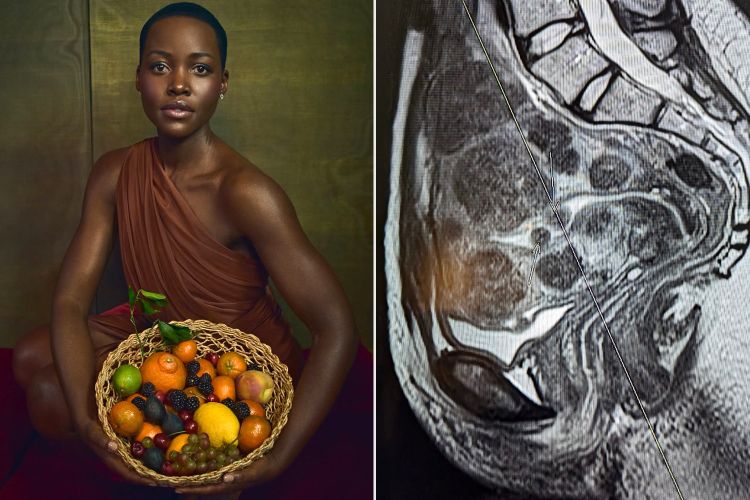
Lupita Nyong’o’s decision to speak openly about women’s health challenges was not unexpected; her current activity is based on many years of personal experience. The actress’s story began in 2014, parallel to her career triumph. It was precisely then, when she won the “Oscar” for the film “12 Years a Slave,” that doctors discovered growing tumor formations in her body.
For the purpose of maintaining reproductive function, Lupita underwent a myomectomy, during which surgeons excised up to 25 nodules. Despite the successful intervention, the result turned out to be temporary: during the next 12 years, more than 50 additional fibroids developed in her uterus. Some of them reached significant sizes, which was followed by constant pain in the pelvic area and pathological bleeding. These processes, in the final analysis, caused severe anemia and psychological isolation. According to the actress, she lost a dangerous amount of blood monthly and “suffered in silence” against the background of constant pain. With this sincere confession, she emphasized the feeling of shame and that tendency of normalizing pain which represents everyday life for many women.
The actress began speaking publicly about her condition in 2025, after supportive responses from other women. According to her, this case is not rare, but simply a “rarely told story.” Already in 2026, together with the “Women’s Health Fund,” she launched the campaign #MakeFibroidsCount. The initiative aims at mobilizing financial resources for the research of minimally invasive treatment methods.
What are Uterine Fibroids?
Uterine fibroids, the same as leiomyomas, represent the most widespread benign tumors in women of reproductive age. Statistically, by the age of 50, this pathology is revealed in 70-80% of women. The formations are shaped from the muscular and connective tissue of the uterus, to which stimulation is provided by the hormonal background (estrogen and progesterone) and genetic factors.
Fibroids are often asymptomatic and their size or number differs sharply among patients. In those cases where the pathology manifests symptomatically, it is reflected sharply on the patient’s quality of life:
Menorrhagia: Excessive bleeding often becomes the cause of iron-deficiency anemia and chronic fatigue.
Compressive phenomena: Pressure on neighboring organs determines the frequenting of urination, back pain, or constipation.
Reproductive risks: Fibroids might cause infertility or the complication of the course of pregnancy.
Racial Disparity
Uterine fibroids cause disproportionately great harm to Black women. Statistically, by the age of 50, this pathology reaches 80-90% in their population, while in white women this indicator is relatively lower. Along with this, in Black patients, the disease is revealed at a much earlier age and is characterized by a high severity of clinical course.
This crisis is further exacerbated by genetic predisposition and systemic barriers to access to medical services. Often, patients are offered the early excision of the uterus, despite the fact that they wish to maintain reproductive function. The mentioned approach increases the risks of infertility and sharply decreases the quality of life.
The process of diagnostics is delayed for years because, due to the tendency of normalizing pain, symptoms are often attributed to a “normal menstrual cycle.” Lupita Nyong’o’s story represents precisely this inequality: Black women are often forced to deal silently with a disease whose research/funding does not yet correspond to existing needs.
Modern Standards of Diagnostics and Treatment
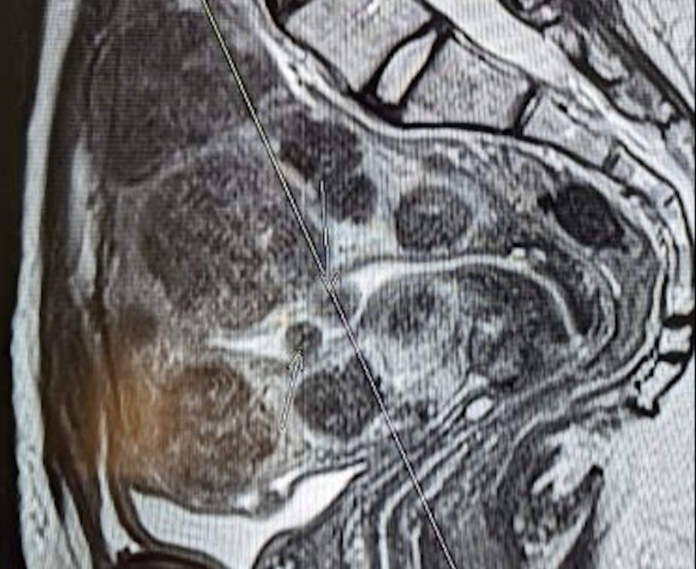
The development of visualization methods has made the diagnostics of fibroids much more accurate and accessible. Pelvic ultrasound remains the method of primary research, while magnetic resonance imaging is used to compile a detailed topographical map according to the FIGO classification. This classification, which groups formations according to localization, plays a decisive role when selecting surgical tactics. While to evaluate the degree of deformation of the uterine cavity, especially in the existence of submucous (submucosal) nodules, specialists turn to hysterosonography.
The treatment strategy is based on the principle of making a joint decision with the patient, where the severity of symptoms and reproductive plans are priorities. Therapeutic approaches are presented in the following form:
Symptomatic management: To reduce pain and bleeding, non-steroidal anti-inflammatory drugs (NSAIDs) and tranexamic acid are used.
Hormonal therapy: Progestins, combined contraceptives, and intrauterine systems containing levonorgestrel (coil) reduce blood loss by 40-50%.
GnRH preparations: Gonadotropin-releasing hormone agonists effectively shrink the size of fibroids. Unlike them, GnRH antagonists, such as Relugolix (Ryeqo®), are distinguished by the convenience of oral intake and ensure a rapid 20-50% reduction of nodules.
SPRMs: Selective progesterone receptor modulators (for example, ulipristal acetate) effectively manage symptoms, although they require periodic monitoring of functional liver indicators.
Technological Progress
Modern gynecology actively strives toward the introduction of uterus-preserving, minimally invasive methods, which has significantly reduced the share of hysterectomies in leading centers. Innovative interventional methods offer patients an alternative to traditional surgery:
Uterine Artery Embolization (UAE): The introduction of special particles through a catheter stops the blood supply to the fibroids. This method ensures a 40-60% reduction of nodules and long-term improvement of symptoms in the majority of patients.
Ablative technologies: MRI-controlled or high-intensity focused ultrasound (HIFU) performs the non-invasive destruction of tissue in ambulatory conditions. While radiofrequency ablation (RFA) (with laparoscopic or ultrasound control) gives the possibility of the precise destruction of nodules.
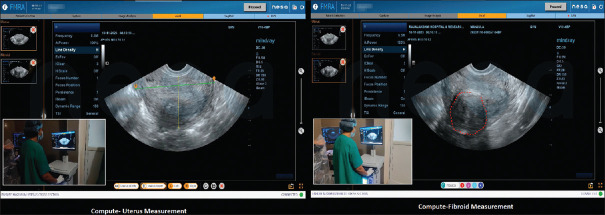
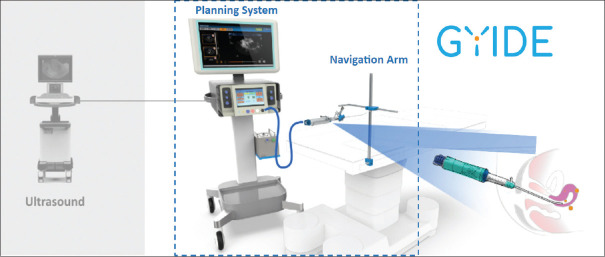
Increasing accessibility: Such systems as GYIDE make it possible to use these technologies in primary healthcare, even in an environment with low resources, without damaging the uterine wall. Microwave and cryoablation are also added to the arsenal.
Despite new methods, surgical myomectomy still remains the “gold standard” for the purpose of maintaining the organ, which was also Lupita Nyong’o’s choice. However, at this time, the risk of recurrence amounts to 30-50%.
Clinical Research and Innovations
Ongoing research reinforces future perspectives:
Pharmacotherapy: Testing of new oral GnRH antagonists for the management of severe bleedings.
Gene therapy and nanotechnologies: Purposeful impact on MED12 mutations and the use of nanoparticles for the local delivery of preparations.
Artificial Intelligence: AI-algorithms in visualization, which predict the growth of nodules and make the treatment plan personalized.
Lupita Nyong’o’s campaign #MakeFibroidsCount funds precisely these scientific breakthroughs. Its goal is such a transformation of the healthcare system where equal accessibility will be guaranteed and no woman will have to endure pain “silently” anymore.
Sources: People; Instagram; Mayo Clinic; NIH; NIH; CanWaCH; Mayo Clinic; JOGC; ClinicalTrials; UCH Clinical Trials; NIH
