


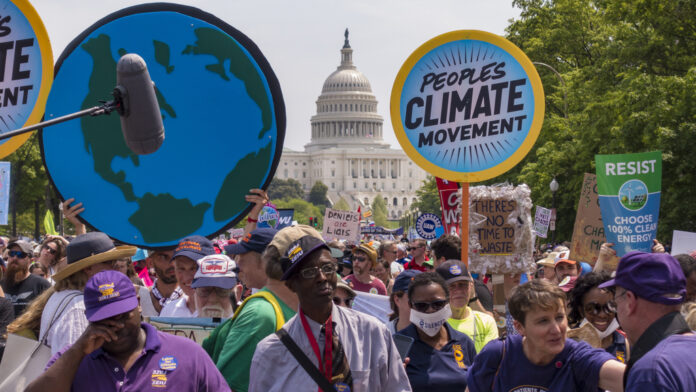
A decade has passed since the historic Paris Climate Summit, which established the world’s first and only global agreement to reduce greenhouse gas emissions. While it is easy to criticize its flaws today, the successes achieved as a result of the agreement are significant and measurable.
One of the main effects of the Paris Agreement is the ongoing revolution in the energy sector. Laurence Tubiana, CEO of the European Climate Foundation and one of the agreement’s key architects, states that “the Paris Agreement unleashed a shift to clean energy that no country can ignore.”
Data from the past decade confirms this:
-
Renewable Energy: Last year, renewable energy generation increased by 15% and accounted for over 90% of new power capacity.
-
Investments: Investments in clean energy have exceeded $2 trillion, which is double the investment made in fossil fuels.
-
Electric Vehicles (EVs): EVs now account for about one-fifth of new cars sold globally.
Most developed countries are on track to reduce emissions, and in China and India, low-carbon energy already accounts for more than half of the total capacity.
Before the Paris Summit, the world was on a path to a catastrophic warming of 4°C. After Paris, this forecast was reduced to 3°C.
According to UK Shadow Energy Secretary Ed Miliband, after the commitment to stay within 1.5°C was reinforced at COP26 in Glasgow (2021), the projected warming increase dropped to 2.8°C. Today, if all existing promises are fulfilled, the forecast is approximately 2.5°C.
Despite the progress, as Miliband notes, this figure is “still a long way short of what we agreed to in Paris,” which aims to stay within 1.5°C.
In the first years following the signing of the Paris Agreement, progress was significantly hit by two factors:
-
The Trump Factor: The election of Donald Trump as US President (2016) and the attempt to withdraw the US from the agreement (2017) weakened the global consensus. Although other countries did not follow suit, Trump’s potential return to the White House (2025) still poses a threat.
-
The Rise in China’s Emissions: Carbon dioxide emissions in China have sharply increased since 2017. Although China’s emissions were peaking around 2015, the construction of coal-fired power plants accelerated starting in 2017 due to stimulus in the construction sector and, according to analysts, in response to Trump’s tariffs. Approximately 90% of the growth in greenhouse gases since the Paris Agreement is attributed to China.
However, China’s path is contradictory: last year, the country added more renewable energy capacity than the rest of the world combined. China’s manufacturing prowess has reduced the price of solar panels by about 90% over the last decade.
India, which could surpass the US in terms of emissions within the decade, is also rapidly following this trend: half of its installed power capacity is already low-carbon.
The existence of the Paris Agreement was facilitated by a global alliance, where developing countries joined developed ones. However, in recent years, the trust gap between developed and developing nations has widened.
Developing countries express dissatisfaction with the delayed response of developed countries in fulfilling financial commitments. The dispute over establishing a Loss and Damage fund for communities affected by climate disasters was particularly acute. At COP29, developed nations procrastinated until the last hour to numerically fix their contributions within the $1.3 trillion annual climate finance framework.
Evans Njewa, head of the UN developing countries group, reminds developed countries that providing financial assistance is an obligation, not charity, and that it is the “only legitimate answer to a global crisis.”
