


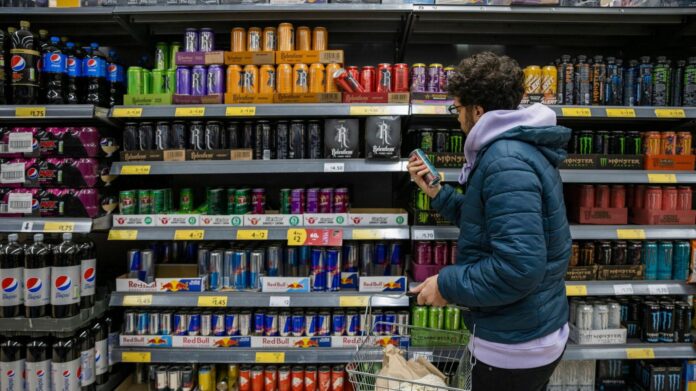
As per a new law, teenagers under the age of 16 in England will be banned from buying energy drinks like Red Bull and Monster.
This decision is driven by concerns that energy drinks have a significant negative impact on adolescent health. The high sugar and caffeine content in these drinks is directly linked to obesity, sleep disorders, and problems with concentration.
British health experts, teachers’ unions, and dental associations have all supported the ban, stating that it will help improve the health of children and young people.
“How can we expect children to do well in school if they’re consuming the equivalent of a double espresso every day?” said Health Secretary Wes Streeting.
“Energy drinks may seem harmless, but they affect children’s sleep patterns, concentration, and overall health, while sugary versions damage their teeth and contribute to weight gain,” Streeting noted.
Shops, cafes, and restaurants will be prohibited from selling energy drinks with more than 150 mg of caffeine per liter to individuals under 16. This regulation will affect drinks like Red Bull, Monster, Relentless, and Prime Energy, compelling manufacturers to change their product formulations.
For example, a 250 ml can of Red Bull contains 80 mg of caffeine. The ban will not apply to tea, coffee, or soft drinks, which contain less caffeine. It is not yet known when the ban will come into force.
Notably, supermarkets in England voluntarily stopped selling these drinks to under-16s back in 2018. However, some smaller shops have not complied with this regulation. Currently, drinks containing more than 150 mg of caffeine per liter already have a warning label stating that they are not intended for children.
English teachers have expressed concern that students who drink energy drinks on their way to school are less focused and more hyperactive throughout the school day.
Evaluations A study by the NASUWT teachers’ union showed that 71% of teachers are concerned about students’ consumption of energy drinks, which negatively affects their behavior.
Matt Rec, the general secretary of one of the unions, noted that despite the ban, teenagers under 16 will still be able to get the drinks with the help of parents or other adults.
The British Dental Association stated that the ban should also extend to sugar-free and low-sugar energy drinks.
“Products that cause addiction and contain more than 20 teaspoons of sugar should not have a place in children’s diets,” said the association’s chairman, Eddie Crouch.
According to research, excessive caffeine intake in adolescents can lead to anxiety, irritability, nausea, cardiovascular diseases, sleep disorders, osteoporosis, and stomach ulcers.
Gavin Partington, the general director of the British Soft Drinks Association, stated that companies do not market or promote these drinks to individuals under 16.
“Members of our association do not market or promote energy drinks to under-16s, and all high-caffeine drinks are labeled as not recommended for children,” Partington said. In his opinion, “as with all government policies, it is essential that any future regulation is based on a thorough evaluation of the existing arguments.”
Georgia In several countries, the sale of energy drinks to individuals under a certain age is prohibited, but in Georgia, there are no regulations on the purchase of such products. According to experts, it is critically important to have a special legislative framework to regulate the issue.
Energy Drinks and Adolescent Health: A Neurologist’s Assessment
According to neurologist Teona Shatirishvili, frequent consumption of energy drinks poses serious health risks for teenagers. These beverages contain large amounts of sugar and caffeine, as well as various stimulants like guarana, taurine, and L-carnitine.
“The combination of these components directly affects the adolescent central nervous system, which is in a phase of intensive development and is particularly sensitive. As a result, it often leads to:
- Sleep disturbances and insomnia, which hinder normal brain development.
- Reduced concentration and memory.
- Psycho-emotional problems—irritability, anxiety, and depressive symptoms.
- Neurological disorders—impaired coordination, headaches, and others.”
Furthermore, the high sugar content increases metabolic and cardiovascular risks.
International Recommendations:
- The American Academy of Pediatrics (AAP) unequivocally states that energy drinks are not recommended for children and adolescents.
- Any source of caffeine should be avoided for children under 12 years old.
- For ages 12-18, the daily maximum dose is 100 mg of caffeine, though a single energy drink often significantly exceeds this limit.
The specialist also notes that state policy should recognize energy drinks as high-risk products.
“As a child neurologist, I believe that energy drinks pose a significant risk to the health and neurodevelopment of adolescents. Their high sugar and caffeine content increases the risk of neuropsychological disorders, sleep dysfunction, and behavioral and emotional problems. It is essential to:
- Prohibit the sale of energy drinks in schools and school environments.
- Legally stipulate that individuals under 18 do not have access to energy drinks.
- Mandate clear labeling on products indicating the amount of caffeine and sugar, as well as health risks.
- Implement public information campaigns to educate parents, teachers, and adolescents about the harm of energy drinks.
- Encourage pediatricians and neurologists to actively point out the dangers of energy drinks during consultations.
- Recognize energy drinks as high-risk products for health in state policy.”
