


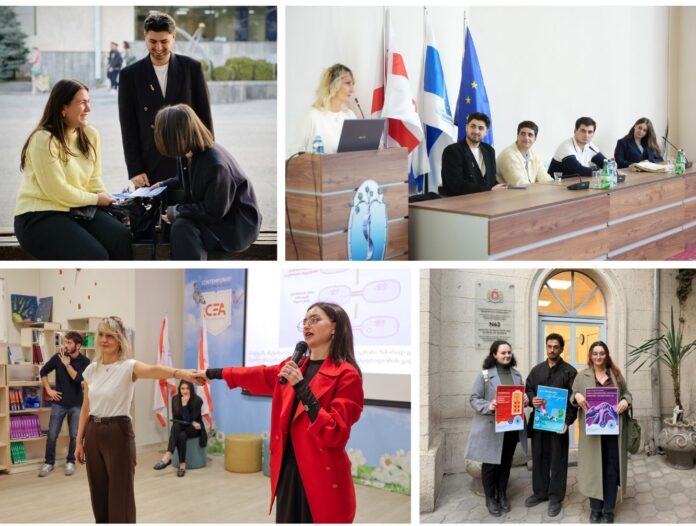
On 24 November 2025, at the height of World Antimicrobial Awareness Week (18–24 November), Tbilisi State Medical University (TSMU) hosted the International Scientific Conference on Modern Challenges and Global Health Issues in Microbiology, with a focus on Eastern Europe and the Caucasus Region. The meeting, dedicated to the 100th anniversary of Professor Tamaz Kereselidze, a leading Georgian microbiologist and public health figure, brought together clinicians, microbiologists, public health experts, and students from across the region. Professor Kereselidze was one of the key contributors to the global smallpox eradication effort and a recipient of the WHO’s “Bifurcation Needle” honour. He embodied the link between clinical microbiology and population-level disease control that the current initiative in combating antimicrobial resistance seeks to achieve.
A global crisis with local implications
With the development of penicillin in 1928, followed by various antibacterial medications, a new hope arose that infectious diseases would no longer be a rampant cause of death and suffering. While the treatments have been tremendously effective, the worldwide adoption of antimicrobial medications has in itself birthed a new problem, one that the world may not be able to handle, if too far gone- Antimicrobial resistance (AMR). It refers to bacteria, viruses, fungi, and parasites evolving so that their respective antimicrobial medications no longer work. In 2019, bacterial AMR was estimated to be directly responsible for about 1.27 million deaths and associated with nearly 5 million deaths worldwide, with a burden that rivals or exceeds that of HIV and malaria.
For countries in Eastern Europe and the Caucasus, AMR interacts with existing vulnerabilities: variable laboratory capacity, uneven regulatory environments for antibiotic sales, and constraints in health system financing and workforce. Against this backdrop, the WHO Global Action Plan on Antimicrobial Resistance was adopted in 2015, aiming to improve awareness and understanding through communication, education, and training.
Over the past decade, as the issue persisted and grew, the framing of World AMR Awareness Week has evolved. Early slogans such as “Handle with care” and “Seek advice” stressed the importance of intervening at the individual level, yet as the burden estimates grew, the tone shifted toward urgency and system-level action, with themes including “Change can’t wait”, “Our time is running out”, and, in 2024, “Educate. Advocate. Act now.”
The 2025 theme – “Act Now: Protect Our Present, Secure Our Future” – marks a further step, explicitly linking current practice to the long-term viability of antimicrobial therapies.
TSMU’s World AMR Awareness Week: a structured campaign
TSMU’s World AMR Awareness Week unfolded as a coordinated, institution-wide campaign led by Professor Tamar Didbaridze (MD, PhD), the head of the university’s microbiology department and a practicing clinical bacteriologist. Since 2015, she has served as a clinical microbiologist at the TSMU First University Clinic Laboratory, working at the intersection of diagnostics, surveillance, and patient care. Her laboratory is part of the CAESAR network, and she coordinates collaborative projects with the Walter Reed Army Institute of Research (WRAIR) and U.S. partners in the antimicrobial-resistance field. From 2025, she also serves as the chairperson of AMJ – the Antimicrobial Stewardship Committee at the First University Clinic of TSMU. In addition, Tamar Didbaridze has been appointed as the ESCMID Local Champion for Georgia for the 2025–2028 term, a role in which she promotes and strengthens ESCMID’s presence and engagement across local and international networks.
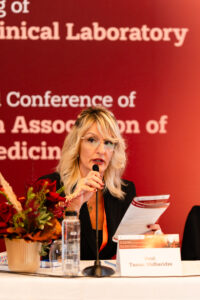
Recognizing antimicrobial resistance as one of the most urgent threats to modern medicine, Professor Didbaridze designed a week-long programme that integrated public outreach, student-driven educational activities, and expert-level scientific discussions into a single coordinated effort. The aim was not only to raise awareness, but to stimulate meaningful dialogue and reinforce evidence-based practices across the university and clinical community.
The week commenced with a public lecture titled “Everything About Antimicrobial Resistance”, delivered by Professor Tamar Didbaridze. Her presentation outlined the central role of clinical microbiologists in antimicrobial stewardship and AMR surveillance, emphasizing the importance of robust laboratory capacity for accurate detection and reporting. She reviewed the standard classifications of resistance – AMR, multidrug-resistant (MDR), extensively drug-resistant (XDR), and pan-drug-resistant (PDR) organisms – and provided an overview of global and regional epidemiological trends. The lecture also examined key mechanisms of resistance and the various pathways through which resistant pathogens emerge and spread, offering students and clinicians a comprehensive foundation for the discussions that followed throughout the week.
“Antimicrobial resistance has been recognised as a global threat, but in our context it is also a daily clinical reality,” Dr. Didbaridze told participants. “For universities and teaching hospitals, the minimum obligation is to ensure that our students and staff understand this problem well enough to change prescribing behaviour and patient counselling.”
TSMU Student led public lectures
To deliver this information to those who need it the most, throughout the week, second- to fifth-year medical students delivered education sessions to their peers at the university on core antimicrobial resistance topics: appropriate and inappropriate indications for antibiotics, the role of misuse and overuse in accelerating resistance, and practical steps clinicians can take to protect antibiotic effectiveness.
“Involving students as educators is deliberate,” Professor Didbaridze explained. It is a growing issue, one that will be even more relevant for their future; hence, raising awareness in the younger generation is critical. “If they see AMR as ‘someone else’s responsibility’, policies will fail. If they see themselves as part of the solution from the beginning of their training, we have a better chance of sustaining change.”
Student teams extended these messages beyond the university, visiting public and private institutions and engaging 7th–9th-grade pupils in local schools. Sessions for schoolchildren focused on infection prevention, vaccination, the risks of self-medication, and the frequently heard misconception that antibiotics are useful for viral infections.
Students from the American MD Program, accompanied by Dr. Didbaridze, visited five schools in Tbilisi, using simplified microbiology concepts to explain why rational antibiotic use is essential. “It can be a challenge to explain this relatively complicated issue to high-schoolers, yet the children seemed responsive and took home some important messages.”
An international conference with a regional lens
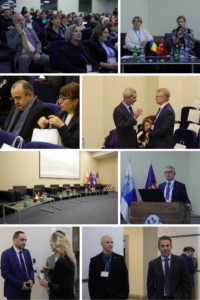
The centrepiece of the week was the international scientific conference at TSMU. Organized by the Department of Microbiology, the Tarchkhnishvili Scientific Society of TSMU, and local and regional partners, the meeting combined Dr.Kereselidze’s centenary commemoration with a forward-looking examination of AMR and related microbiological challenges in Eastern Europe and the Caucasus.
The speaker list underscored how firmly Georgia is woven into international infectious disease networks. Among the invited experts were Robert Leo Skov, President of the European Society of Clinical Microbiology and Infectious Diseases (ESCMID), Steven Beckman from the U.S. Centers for Disease Control and Prevention (CDC) Regional Office for Eastern Europe and Central Asia, and Mariam Jashi, Executive Director of the Global Sepsis Alliance. Nune Dolyan, Technical Officer for Health Coordination and Partnerships at WHO, also attended and highlighted the importance of aligning national AMR work with global initiatives. Also in attendance was Maj. Thomas Musich, Scientific Director and Programme Manager at the Walter Reed Army Institute of Research Europe–Middle East (WRAIR–EME). He provided an overview of WRAIR’s position as the largest biomedical research institution within the U.S. Department of Defense and described the institute’s extensive infectious disease research and surveillance activities across the Europe–Middle East region. WRAIR maintains longstanding collaborations with Tbilisi State Medical University, particularly in the areas of hospital-acquired infections and antimicrobial resistance, making its engagement in Georgia especially significant for strengthening national and regional AMR capacity.
Alongside the keynote lectures, the programme featured regionally driven scientific sessions that grounded the event in local realities. TSMU faculty and clinicians presented current AMR and hospital-acquired infection challenges in Georgia, while colleagues from Armenia and Azerbaijan shared their own experiences, surveillance data, and stewardship approaches, creating a comparative regional perspective rarely seen in such forums. This exchange underscored that Eastern Europe and the South Caucasus face parallel microbiological pressures and that coordinated solutions are essential. The conference also included a student abstract session, where TSMU undergraduates, residents, and young researchers presented their scientific papers, highlighting the growing engagement of early-career scientists in AMR-related research.
A centenary as a starting point
Anchoring the meeting in the centenary of Tamaz Kereselidze linked contemporary AMR debates to Georgia’s own scientific history. Kereselidze’s contributions spanned microbiology, epidemiology, and institutional leadership, and his legacy underscores the longstanding connection between laboratory science and public health in the country.
For organisers, the centenary functioned less as commemoration and more as a reminder of continuity. By combining an international scientific conference with school visits, student presentations, and public lectures, TSMU’s programme attempted to operationalise the shift that WHO is calling for: from raising awareness about AMR to embedding action into daily academic and clinical routines.
“The challenge now is consistency,” said professor Didbaridze at the end of the week. “If initiatives like this remain isolated events, the impact will be modest. If they become part of how we teach, prescribe, and communicate every week of the year, then we will have taken a meaningful step from awareness to implementation.”
One Health and Future plans for partnership
The event concluded with a closing panel discussion, “AMR and the One Health: What’s Next in the Global Battle Against Resistance”. Panellists examined how human, animal, and environmental policies can be aligned in the region, and how lessons from conflict settings can inform broader strategies. A dedicated segment focused on “Antimicrobial Resistance in Ukraine: Combat Wound Infections”, where Dr. Musich described the microbiological profile of combat-related injuries, emerging resistance patterns, and the implications for both military and civilian healthcare systems.
“In panel discussions, it is easy to agree on principles,” Professor Didbaridze commented afterwards. “The real test is how many of those principles appear in protocols, budgets, and daily routines in the months that follow.”
