


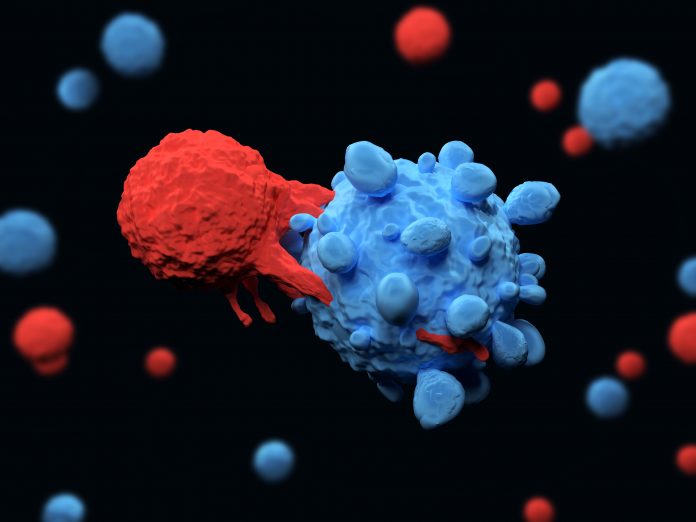
According to a report published in the prestigious scientific journal The New England Journal of Medicine, a potentially important breakthrough in oncology has been reported: just two infusions of genetically modified CAR T-cell therapy led to the complete disappearance of a malignant liver tumor — hepatoblastoma — in a 3-year-old patient.
CAR T-cell therapy is an innovative form of immunotherapy in which a patient’s own immune cells are genetically engineered in the laboratory to recognize and destroy cancer cells. Although the approach has shown high efficacy against blood cancers, treating solid tumors with CAR T-cell therapy has remained a major challenge.
At the time of diagnosis, the 3-year-old boy had a massive tumor in the left lobe of his liver (11.2 × 9.6 × 7.1 cm), with metastases in the lungs and suspected involvement of the bones. The patient underwent three courses of chemotherapy and several complex surgeries to remove the primary tumor and lung metastases. However, the disease soon returned and became resistant to chemotherapy.
The child was subsequently enrolled in the CARE study, where he received an experimental treatment. Scientists genetically modified the patient’s T cells to recognize glypican-3 (GPC3), a specific protein found on liver tumors. They also introduced genes encoding interleukin-15 and interleukin-21 to enhance the cells’ persistence and ability to fight the tumor.
The patient received two doses of GPC3-CAR T-cell therapy. Following the first infusion, levels of the tumor marker alpha-fetoprotein dropped sharply. Eight weeks later, after the second dose, computed tomography showed complete regression of the disease — apart from scar tissue, there was no longer any detectable evidence of the tumor. Twelve months after treatment, the child remained completely free of disease.
According to pediatric oncologist David Steffin of Baylor College of Medicine in Houston, the case demonstrates that a durable and complete response can be achieved in a chemotherapy-resistant solid tumor even in an outpatient setting, without systemic toxicity.
The researchers emphasize that this is, so far, a successful clinical case involving a single patient in an early-phase study. Further testing is ongoing at Baylor College of Medicine and in the IMPACT clinical trial at Seattle Children’s Hospital to establish the safety and efficacy of the approach.
