


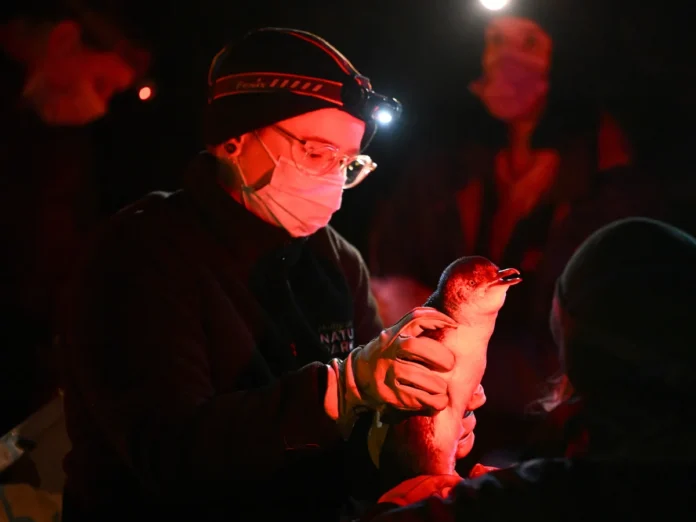
In the Australian state of Victoria, specifically on Phillip Island, more than 1,000 Little Penguins have been vaccinated against bird flu (H5N1). This is the world’s largest vaccination program for wild birds, with plans to deliver two vaccine doses to up to 5,000 penguins in total.
According to Catherine Basterfield, chief executive of Phillip Island Nature Parks, a medical intervention of this scale in the wild is being carried out for the first time in the world. Although capturing and vaccinating penguins is a fairly challenging process, the task is simplified by the fact that the birds return to the same burrows every evening. Specialists place them in small pens on the beach, weigh and measure them, microchip them, and release them after vaccination. Vaccinated penguins will receive their second dose after three weeks.
Little Penguins are the world’s smallest penguin species, native only to southern Australia and New Zealand. According to national assessments, they belong to a “very high risk” group in the face of deadly bird flu. The urgent need for vaccination arose after cases of the virus were recorded on Phillip Island, South Australia, and Tasmania (on King Island, Tasmania, the virus has already killed more than 50 penguins).
As Australian experts note, it takes about 10 weeks to develop immunity. Consequently, vaccination before the spread of the virus is critically important to prevent mass mortality (under the worst-case scenario, the virus could claim up to 16,000 penguins).
Although the vaccine is not a universal solution and strict biosecurity measures remain essential, it serves as one of the primary tools to save this unique species, which is already heavily threatened by the climate crisis. Beyond their ecological importance, penguins also hold immense economic value for the region—the “Penguin Parade” on Phillip Island attracts up to 700,000 tourists annually, contributing $500 million to the state economy.
