


English Translation
Words as Medicine: Invisible Factors and Controversies of Therapeutic Communication in Breast Cancer Management
There are few diagnoses in the history of oncology where management tactics depend as much on the patient’s personal choice as breast cancer. Although the disease is one of the most severe challenges worldwide in terms of prevalence and mortality rates (ranking second among women with 2.3 million new cases annually), it remains one of the most “decision-dependent” diseases in oncology, where the best clinical choices must be based on the patient’s values and preferences.
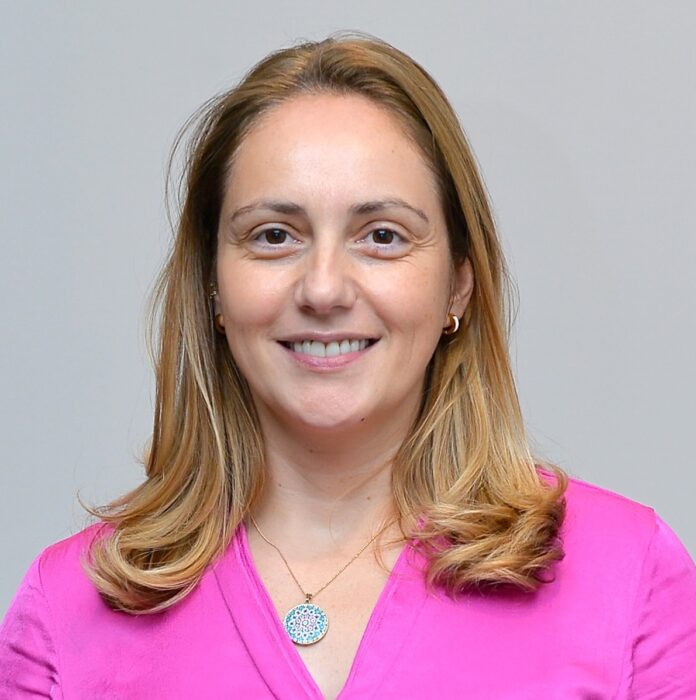
At the international healthcare conference GIMPHA 2026, healthcare marketing and communication specialist Sopho Gogelashvili detailed the invisible factors of therapeutic communication in the clinical practice of this disease. The presentation clearly highlighted a fundamental medical controversy: the main challenge in breast cancer management is not merely determining the best treatment, but rather how the doctor discusses this treatment with the patient.
For years, doctor-patient communication was perceived merely as a “soft skill,” but recent studies have completely shifted this paradigm. Large-scale 2024 data from the American Society of Clinical Oncology (ASCO) unequivocally confirmed that communication is a direct clinical intervention. According to the study, patients who rated the quality of communication with their doctor negatively showed a 64% lower treatment adherence rate, and one in five patients completely ignored their medical plan. Consequently, the perceived quality of communication directly determines therapeutic outcomes and is not just statistical data.
In clinical practice, three main models of the doctor-patient relationship are discussed:
-
The Paternalistic Model
-
The Informed Model
-
The Shared Decision Making (SDM) Model
Although 87% of oncologists favor the SDM model and find it comfortable today, only 56% apply it in real practice, creating a serious clinical dissonance. Furthermore, paradoxically, imposing the universal SDM model on everyone carries potential risks. Scientific evidence shows that forcing “excessive” involvement on some patients who do not wish to participate in decision-making often pushes them toward regret and more radical surgical interventions, such as increased rates of mastectomy. This underscores the fact that finding the optimal balance between patient autonomy and the physician’s responsibility is a strictly individual process.
Equally acute is the controversy of sharing the prognosis in metastatic breast cancer (mBC), where the doctor has to balance truth and hope. Large-scale meta-analyses show that while 98% of patients want to know their diagnosis fully in the initial stages of the disease, this demand changes as the disease progresses, and up to 30% of patients prefer not to receive information about a grim prognosis at all. It is in these moments of crisis that the true value of empathy as a clinical tool becomes apparent. It is proven that just a 40-second empathetic response from a doctor statistically significantly improves the patient’s perception of information and value sharing. Today, empathy is no longer considered an innate, subjective trait—it has become an operationalized, learnable clinical competence through the NURS model (Naming, Understanding, Respecting, Supporting).
To translate theoretical concepts into practice, clinical care today relies on the integrated framework of SPIKES and SDM, which was clearly demonstrated by analyzing the clinical experience of a 35-year-old patient, Natia. A specific case, in which the patient interacted with two radically different medical approaches, showed how preparing the environment, assessing perception, delivering information, and managing emotions change the patient’s trust.
-
Clinic 1: The lack of privacy and a dry, directive explanation of the surgical technique caused the patient’s alienation.
-
Clinic 2: Active listening, respect, and the gradual involvement of the patient in decision-making by the doctor created a complete therapeutic alliance.
This directly echoes Self-Determination Theory, where a sense of competence, support, and involved decision-making are the main determinants of treatment adherence.
Against the backdrop of all these challenges, it becomes undeniable that integrating therapeutic communication into modern oncology requires a systemic approach. This implies raising awareness of communication techniques, monitoring the patient experience, and implementing new guidelines into oncological specialization standards. The final medical conclusion is absolutely clear: in breast cancer management, communication is not just a characteristic of certain people; it is a powerful clinical tool with measurable results. In the heaviest moments when a patient goes to a doctor, the doctor’s words, tone of voice, and expressed empathy are exactly as much of a clinical intervention as any pharmacological or surgical procedure.
