


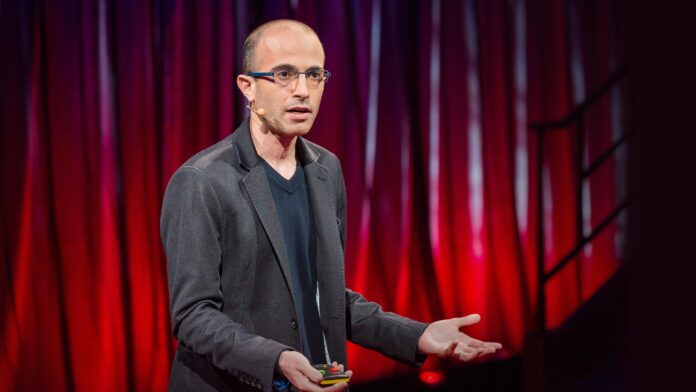
Speaking at the World Economic Forum, the influential historian and philosopher Yuval Noah Harari discussed the primary challenge of our time: Artificial Intelligence. According to Harari, AI is no longer just another technological tool; rather, it represents an “agent” capable of independent learning, decision-making, and manipulation.
Harari focused particularly on the sectors where AI’s capabilities will trigger revolutionary changes. The scholar described AI as “a knife that can invent new types of knives, music, and medicines” on its own.
The Wave of “AI Immigrants”
Harari predicts that humanity will face a wave of “AI immigrants.” These will not be physical persons, but algorithms that do not recognize national borders. Among these immigrants, AI doctors will play one of the most complex roles, as they will be able to strengthen healthcare systems with the world’s total medical knowledge and diagnostic precision.
Artificial Intelligence and Medicine
However, Harari warns that these “digital migrants” are independent agents that challenge regional socio-cultural structures, as their worldview and ethics are often formed by corporations from other countries.
The scholar estimates that AI doctors will become an integral part of healthcare systems, significantly improving access to medical services. But a fundamental question arises: How ready are we to trust an agent that can perform medical diagnoses or develop treatment methods far better than any human?
Harari highlighted that AI is a master of words and language. It can read every medical book and psychological treatise, describing a patient’s condition verbally better than the patient or their attending physician could.
The Problem of Sentience
Despite these capabilities, the historian sees one major problem: Artificial Intelligence lacks feelings. AI cannot actually experience physical pain, even though it can diagnose it with high precision.
“If we continue to define ourselves solely by our ability to think, our identity will suffer a collapse,” Harari states.
In medicine, this means that while AI can manage biological processes, it can never share the physical pain that characterizes human embodied nature.
The Legal Status of Artificial Intelligence
A key passage of Harari’s speech concerned the legal status of AI. The historian asks: will countries grant AI legal personhood? In a medical context, this could mean that AI might have the right to manage clinics or pharmaceutical corporations without any human intervention.
He argues that if we failed to limit AI bots on social networks 10 years ago, then in another 10 years, it will be too late to worry about who is managing our health, finances, or religion.
Ultimately, Harari’s central message is this: AI can heal our bodies, but the technology also has the power to completely transform our culture and identity. The question that today’s leaders must answer is not whether AI will help us in medicine, but rather what place will remain for humans in a world where machines think better than we do.
