


For the first time in history, researchers have been able to slow the progression of Huntington’s disease, a condition previously considered incurable. The gene therapy known as AMT-130 managed to reduce the progression of the disease by 75% over three years, instilling new hope in thousands of patients.
Huntington’s disease, which typically appears between the ages of 40 and 50, causes the irreversible destruction of brain cells. As a result, patients develop motor, cognitive, and behavioral problems, which reduce lifespan. Until now, existing therapies only served to alleviate symptoms and did not change the course of the disease.
The groundbreaking Phase I/II study of AMT-130 evaluated a single-dose gene therapy that is delivered to the brain through surgical intervention. It works by reducing the level of the mutant Huntingtin protein, thereby preventing neuronal damage. The results confirm that this is the first drug that can significantly slow clinical progression, turning a once-unstoppable disease into a manageable and potentially preventable condition.
How Does AMT-130 Work?
AMT-130 uses a harmless virus to deliver genetic material directly to the brain cells. This material instructs the cells to create molecules that block the production of the mutant protein. This innovative approach aims for a single, long-lasting treatment without the need for repeated doses.
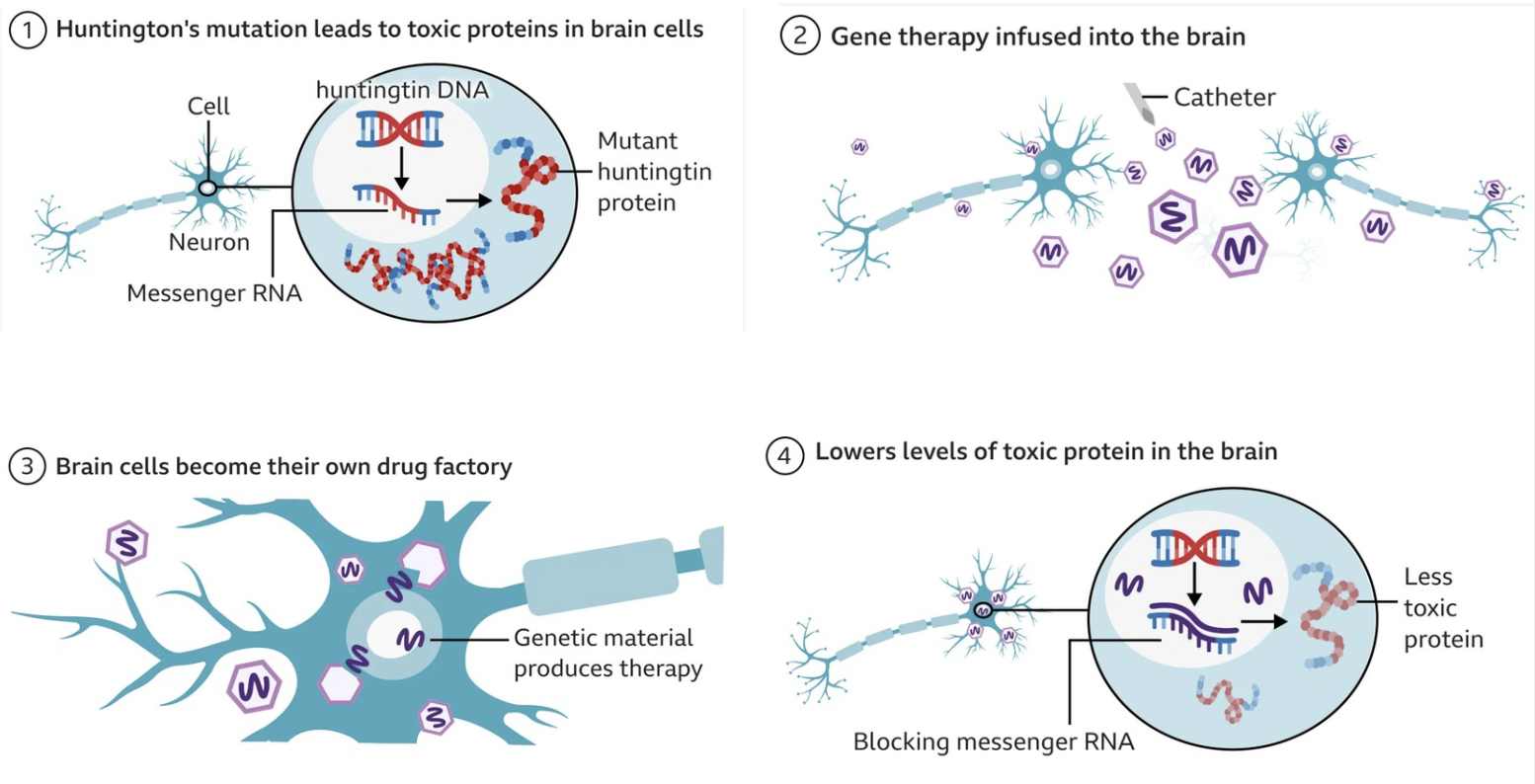
The therapeutic agent is surgically administered into two key regions of the brain (caudate nucleus, the putamen) that are damaged in Huntington’s disease. The procedure is complex and risky, but the potential benefits could bring about a radical change.
Study Results
The study, which involved 29 patients with early-stage disease, evaluated clinical outcomes over 36 months, which were then compared to data from a control group.
75% slowing of disease progression (measured by the Unified Huntington’s Disease Rating Scale). This means that the typical one-year deterioration of the disease required four years under the treatment.
The decline in the ability to perform daily activities was reduced by 60%.
Positive trends were observed in cognitive and motor tests.
A reduction in neurofilament light – a biomarker of brain cell damage.
Good safety indicators were noted, and the side effects of the surgical intervention were manageable.
Significant improvement was observed in some patients: some resumed work activities, while others avoided the use of a wheelchair, which would have been impossible without the therapy.
Approximately 75,000 people in the US, Europe, and the UK live with this diagnosis, and many more have the genetic risk. Dr. Sarah Tabrizi (University College London), who led the research, stated: “These data give long-awaited hope to the people and families affected by this disease.”
Future Perspective
The path of AMT-130 towards integration into clinical practice is not yet complete. The company uniQure plans to meet with the FDA at the end of 2025 to submit an application for approval at the beginning of 2026. The goal is for the therapy to be implemented in the US by the end of the same year. After that, negotiations with European regulators will take place.
Scaling up this therapy is difficult due to the necessity of surgical intervention on the brain and limited manufacturing resources. Additional barriers are created by the likely high cost of the therapy. Nevertheless, specialists believe that this is only the initial stage for utilizing the potential of gene therapy against neurodegenerative diseases.
Further data from ongoing studies (including patients at different stages) will determine for whom this treatment is most beneficial. To determine the optimal approach, it is necessary to compare AMT-130 with other drugs that are administered into the spinal fluid or taken orally (in pill form).
This historical success is based on the firm dedication of Huntington’s patients, their families, and supporters who agreed to participate in the research and share the necessary information with the researchers. Professor Ed Wild (UCL) noted: “Together, we have written a new future—now we must make it a reality for everyone who needs it.”
