


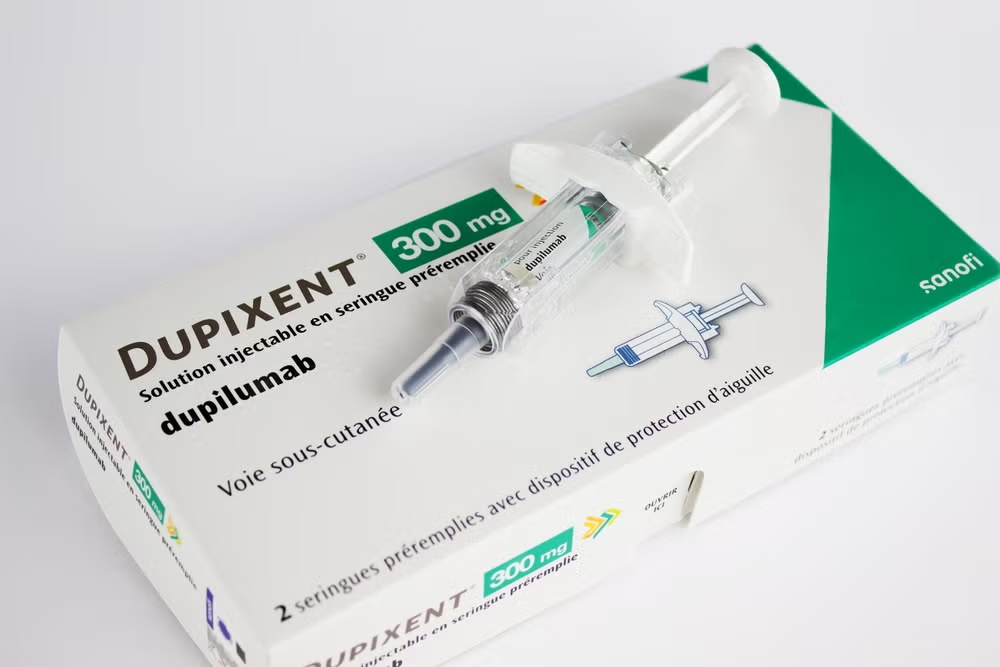
In February 2026, the U.S. Food and Drug Administration (FDA) officially approved Dupixent® (dupilumab) for the treatment of Allergic Fungal Rhinosinusitis (AFRS) in adults and children aged 6 years and older who have a history of sinus and nasal issues or have recently undergone sinus surgery. This marks the first time a specific medication has been approved for the treatment of this disease.
Allergic Fungal Rhinosinusitis is a chronic Type 2 inflammatory disease characterized by strong allergic reactions to environmental fungi. This reaction damages the sinuses and often leads to functional problems of the nasal tract, such as nasal congestion and a decreased sense of smell (anosmia). In severe cases, the disease can cause bone erosion around the sinuses and even facial deformities. AFRS is particularly prevalent among people living in warm and humid climates.
What is Dupilumab and How Does It Work?
Dupilumab is a laboratory-engineered monoclonal antibody. Its mechanism of action is based on blocking the signaling of two key proteins: interleukin-4 (IL-4) and interleukin-13 (IL-13). These proteins are responsible for the intense inflammatory processes characteristic of AFRS. Importantly, dupilumab is not a global immunosuppressant; it acts transitionally and target-specifically, which increases its safety profile and reduces the risk of systemic side effects.
Clinical Trial Results and Key Outcomes
The standard approval of dupilumab for AFRS is based on the Phase 3 trial named “LIBERTY-AFRS-AIMS,” which included both adults and children from age 6. Patients received the drug at dosages proportional to their age and weight (dosing twice or four times a month) or a placebo. According to the main results, dupilumab increased the sinus clearance rate (based on CT scans) by approximately 50% compared to the placebo, representing a major advancement in symptom management.
In the same study, dupilumab:
-
Significantly reduced the size of nasal polyps and the rate of total nasal passage obstruction.
-
Had a significant impact on the process of fully restoring the sense of smell.
-
Reduced the need for corticosteroids or further surgeries to manage AFRS.
These results demonstrated that dupilumab is not limited to temporary symptom relief but actually changes the course of the disease’s progression and reduces the need for heavy invasive interventions.
Significance of the FDA Decision in Clinical Practice
The approval of dupilumab represents a leap forward in the real-world treatment of AFRS because:
-
Targeted Therapy: Patients can now receive a treatment that directly targets and alters the inflammatory pathway.
-
Stability: It provides the possibility of stabilizing the disease, which significantly reduces the risk of relapse and subsequent associated disorders.
Safety and Side Effects
The most commonly reported side effects during the treatment of AFRS with dupilumab include:
-
Local reactions at the injection site.
-
Conjunctivitis (irritation of the eye’s mucous membrane).
-
Eosinophilia (increase in white blood cell count).
-
Muscle pain.
Overall, the safety profile remains positively assessed, providing doctors and patients with greater confidence in the use of the drug. The approval of dupilumab for AFRS is a milestone that researchers and clinicians have long awaited. This medication is no longer just focused on symptom reduction; it represents a strategic, immuno-targeted tool that significantly improves patients’ quality of life.
source:
