


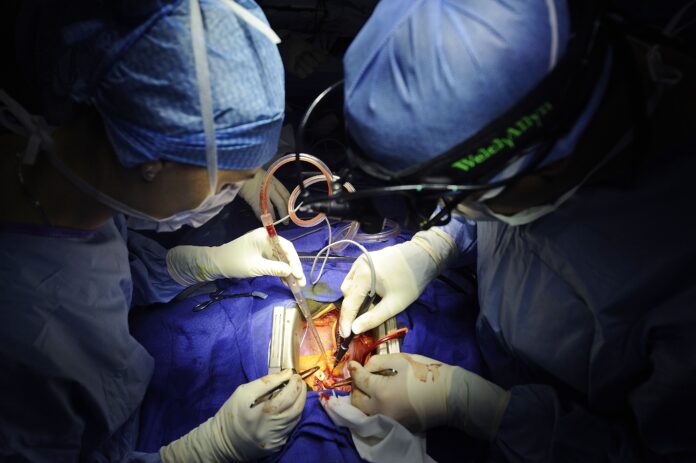
The Frozen Elephant Trunk (FET) technique is one of the most advanced methods in modern aortic arch surgery. It combines the classic open cardiothoracic approach with endovascular stent-graft technology, allowing for the treatment of complex pathologies of the ascending aorta, the arch, and the proximal descending thoracic aorta in a single surgical session.
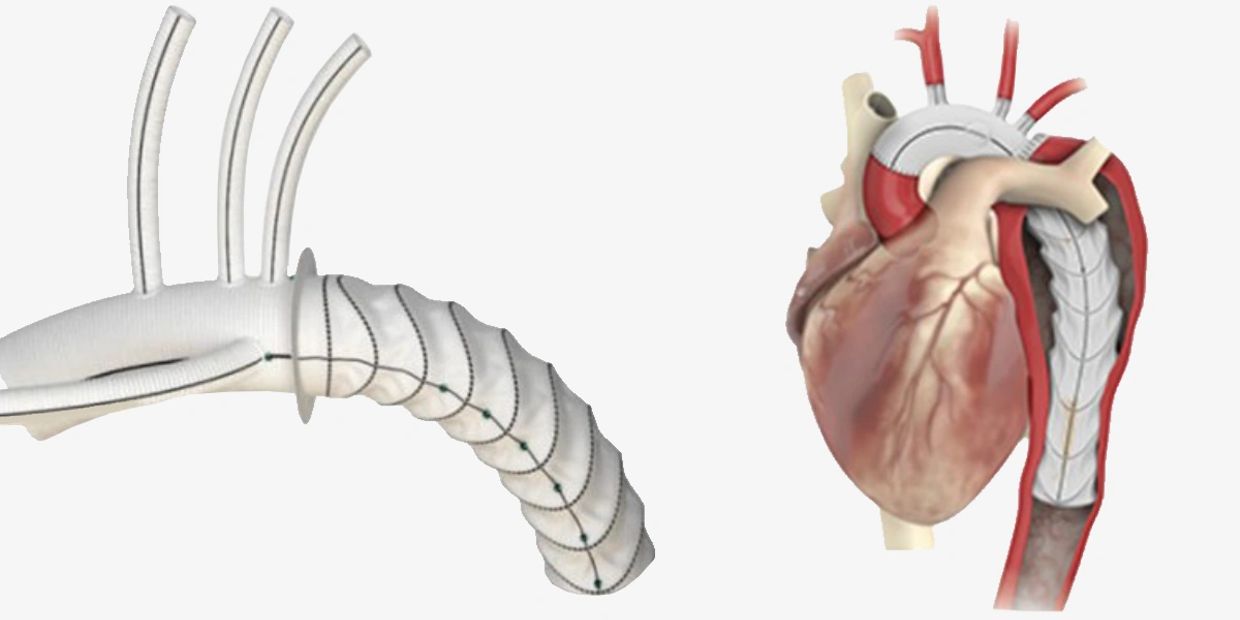
FET represents the evolution of the traditional “Elephant Trunk” approach, which historically required two separate stages: first, replacing the arch and leaving a portion of the graft dangling in the descending aorta, followed later by a second open or endovascular procedure to address the descending aorta. The “Frozen” variant utilizes a stent-graft integrated into a surgical Dacron graft, almost entirely eliminating the need for a second intervention.
Indications and Clinical Role
Today, FET is recommended for the following conditions:
-
Acute Type A Aortic Dissection involving the arch;
-
Chronic Aortic Dissection extending into the descending aorta;
-
Aortic Arch Aneurysms with distal extension;
-
Complex Multi-segmental Aortic Pathology requiring comprehensive repair.
This approach promotes the expansion of the true lumen, facilitates rapid thrombosis (closure) of the false lumen, and provides a secure “landing zone” for future endovascular treatments if necessary.
Technical Overview
The FET procedure typically involves:
-
Sternotomy;
-
Initiation of Cardiopulmonary Bypass (CPB);
-
Hypothermic Circulatory Arrest with selective cerebral perfusion;
-
Total Aortic Arch Replacement;
-
Antegrade placement of the stented graft segment into the descending aorta;
-
Reconstruction of the supra-aortic vessels.
By combining surgical and endovascular elements, FET allows surgeons to extend treatment distally via a hybrid prosthesis without additional thoracotomies or separate procedures.
Commonly Used Devices
The most widely used hybrid graft systems include:
-
Thoraflex Hybrid — Widely adopted in Europe and now approved in the USA.
-
E-vita Open Neo — A newer generation with improved stent design and maneuverability.
Outcomes and Evidence
-
Early and Mid-term Results: Recent studies show FET is associated with a reduced need for second-stage surgery and favorable early mortality rates (7-9%), which is notably low given the severity of these pathologies.
-
Complications: Risks such as spinal cord ischemia and stroke remain significant concerns, necessitating long-term follow-up.
-
2024 Technical Modifications: Recent multicenter cohorts introduced Simplified Implantation FET (SD-FET), which significantly reduces circulatory arrest time, thereby lowering mortality and postoperative neurological events.
Use in Georgia
While cardiac surgery in Georgia is highly developed, official reports on FET cases are currently absent from indexed international literature. High-complexity hybrid procedures like FET require specialized aortic programs and hybrid operating rooms. Given that this technique is still gaining momentum in countries like the USA or Austria, it may take several years before it becomes a standard practice in Georgia.
source:
