


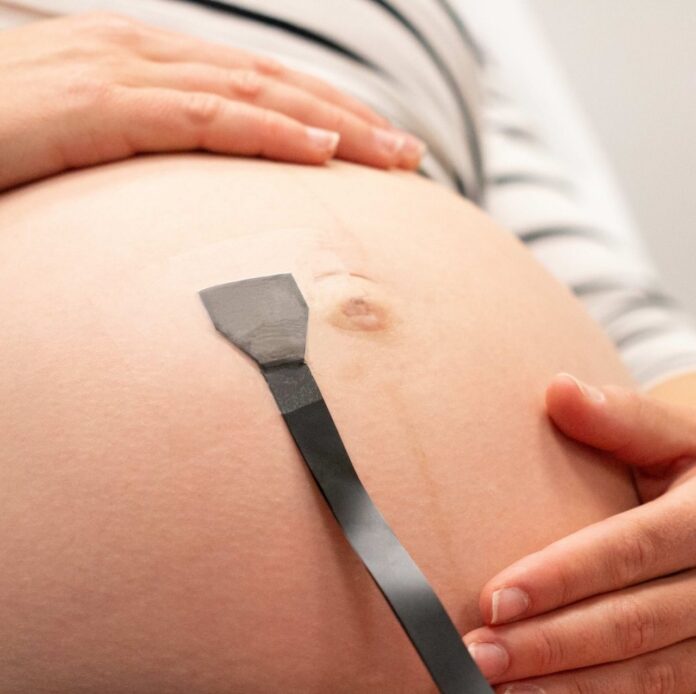
Scientists have developed an ultrasound patch (UPatch) that enables continuous monitoring of the fetus in the womb. Researchers hope that this device will aid in the early diagnosis of pregnancy complications and the prevention of stillbirths.
The device aims to replace existing methods, which suffer from a number of drawbacks. Current continuous monitoring systems often trigger false alarms, whereas traditional handheld ultrasound machines only provide intermittent images and require the active involvement of a specialist.
Developed by scientists from Stanford and Oxford universities, alongside other research centers, the patch can operate for hours, tracking fetal blood flow—including within the moving umbilical cord—in real time. According to a study published in the journal Nature Biotechnology, the researchers utilized specialized electronic components and algorithms to overcome challenges such as receiving weak signals from deep-seated blood vessels and signal loss caused by fetal movement.
The new device, which is currently a proof-of-concept model, was tested by researchers in the US and the UK. In one test involving 62 pregnant women, the blood flow data measured by the UPatch matched the results obtained from traditional ultrasound machines. Furthermore, during the continuous monitoring of 52 pregnant patients, the patch detected the severity of fetal growth restriction in a preeclamptic case. This allowed doctors to make a timely decision to perform a C-section, ultimately preventing fetal death.
The research team is now working on developing a wireless version of the technology to enable its use in daily life at home in the future. These devices will be particularly beneficial for low- and middle-income countries. Along with its immense potential to prevent stillbirths, the device will provide medicine with unprecedented data to understand what factors determine the survival of certain fetuses in the womb.
