


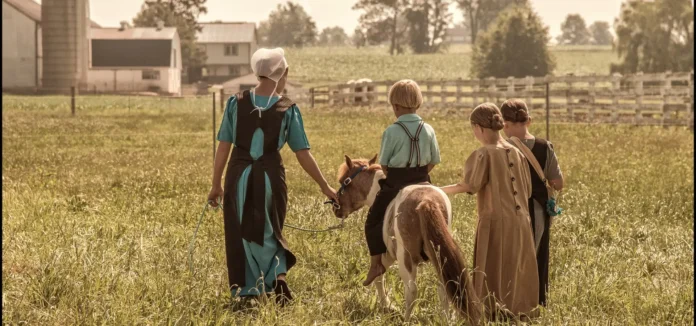
In Pennsylvania’s Lancaster County, USA, the largest measles outbreak in the last 35 years has been recorded. The epidemic has particularly affected the Amish and Conservative Mennonite communities — the so-called “Plain communities,” which are distinguished by a traditional lifestyle, modest dress, and limited use of technology.
According to official data, more than 1,350 cases of measles have been registered in Pennsylvania, with more than a third of them occurring specifically in Lancaster County. Five people have died in the state from measles-related complications (three of them in Lancaster and two in other regions). Experts state that the real numbers are significantly higher, as a large portion of infected individuals do not consult a doctor.
Most cases are mild, although measles can cause severe complications, such as pneumonia and encephalitis.
Dispute over New York’s Mandatory School Vaccinations
Although members of the community avoid certain forms of civic engagement for religious reasons (such as holding public office), they are not completely isolated from society — the Amish actively trade with their neighbors living nearby and maintain daily business relationships, which increases the risk of the virus spreading.
At the same time, against the backdrop of the ongoing epidemic, a group of Amish schools and individuals in New York are appealing to the Supreme Court. They are demanding that the state restore the right to allow religious exemptions for mandatory school vaccinations, which was repealed in New York in 2019, whereas such an exemption is currently still in effect in Pennsylvania.
Religious Doctrine or Cultural Habit: What Underpins Vaccination Skepticism?
According to experts, the low rate of vaccination in traditional communities is not due to religious doctrine, but rather to habits and culture. This approach is primarily based on the belief that non-vaccination in the past went without serious problems, which is accompanied by a distrust of the government healthcare system and outside professionals.
At the same time, attitudes toward vaccination vary significantly between communities. According to a 2022 study, most Mennonite families had their children vaccinated, whereas in Amish families, this figure was about 3 out of 10.
Divergence of opinions in the community remains relevant: some Amish farmers still oppose vaccination, believing that “measles is a natural phenomenon,” while others got vaccinated out of fear that they would be unable to harvest vegetables and tobacco due to illness. According to former medical administrator Allen Hoover, outside professionals need about 20 years to gain trust in the Amish community.
Impact of the Pandemic and New Vaccination Trends
Against the backdrop of strict public health measures imposed during COVID-19, attitudes toward vaccines in traditional communities deteriorated. The increased skepticism toward vaccination during the pandemic also persisted in broader society. In the United States, measles, mumps, and rubella (MMR) vaccination rates among kindergarten students dropped from 95.2% (2019-2020) to 92.4%. In Lancaster County, this rate stands at 88%, and in private and religious schools, it is even lower.
However, amid the scale of the outbreak in Lancaster County, community members have shown greater willingness toward vaccination. The non-governmental organization Union Community Care vaccinated about 450 people in traditional communities through mobile clinics. In addition, doctors have begun vaccinating infants at an earlier age than provided by the standard schedule.
Healthcare representatives predict that with the onset of winter, due to crowding in enclosed spaces, infection cases may increase again, which is why they are calling on the population to get vaccinated.
