


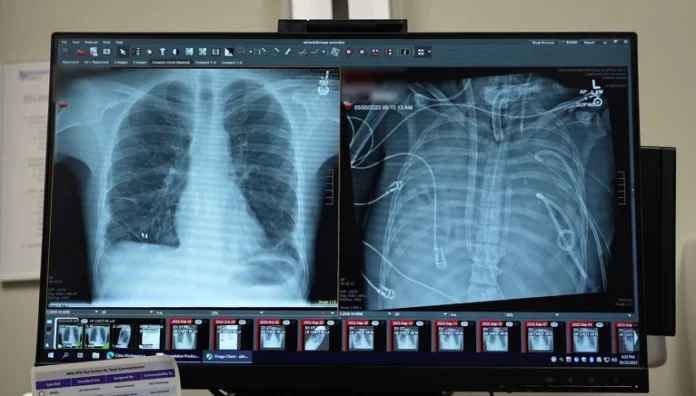
Surgeons at Northwestern University Feinberg School of Medicine have performed a unique procedure. Scientists completely removed a patient’s damaged lungs and kept the individual alive for 48 hours using an artificial lung system.
The study, published in the journal Med, confirms that this new artificial lung system can maintain a patient’s stable condition until a donor organ becomes available.
The 33-year-old patient suffered total lung failure due to a combination of the influenza virus and an antibiotic-resistant bacterial infection. The infection spread to the bloodstream, making an immediate transplant impossible. Notably, performing an organ transplant during an active infection would have resulted in the patient’s death.
The scientists found a solution through an innovative approach. Ankit Bharat, Chief of Thoracic Surgery at Northwestern Medicine, and his team developed a system of shunts, tubes, and pumps.
This mechanism draws blood from the right side of the heart, oxygenates it, removes carbon dioxide, and then redirects the blood directly to the left side of the heart, allowing it to circulate throughout the entire body.
Until now, medicine has utilized Extracorporeal Membrane Oxygenation (ECMO). However, as Professor Bharat explains, ECMO is not a full-fledged artificial lung because it cannot adequately support heart function and blood flow on its own. The new system, by contrast, succeeded in maintaining normal cardiac function even in the total absence of lungs.
Crucially, after the removal of the damaged lungs—the primary source of the bacterial infection—the patient’s condition improved rapidly. Once the body was cleared of the infection, the patient was placed on the transplant list and soon received donor organs.
Two years after the operation, the patient is in satisfactory condition, with both their heart and new lungs functioning normally. This precedent opens new possibilities in the field of medicine.
