


Just a few years ago, performing remote surgery on a patient thousands of kilometers away belonged more to the realm of science fiction than clinical reality. The healthcare sector has always evolved through a continuous cycle of discovery, bold experimentation, and professional audacity. Today, however, once-unfathomable technological milestones are entirely dismantling geographical barriers and fundamentally redefining therapeutic boundaries.
Against the backdrop of this contemporary medical evolution, even the world’s leading nations frequently favor a gradual, cautious adoption of innovations. Georgia, by contrast, has sharply elevated its status within this global dynamic. Thanks to an unprecedented international milestone, the country is no longer merely a recipient of technology—it has dictated its own pace of development and emerged as an active architect of the future of medicine.
The country’s ascension to this position is directly credited to the Mardaleishvili Medical Center. The clinic has successfully executed the first transcontinental telerobotic surgery in the Caucasus region—a case whose unique parameters and sheer scale stand out even in global surgical practice.
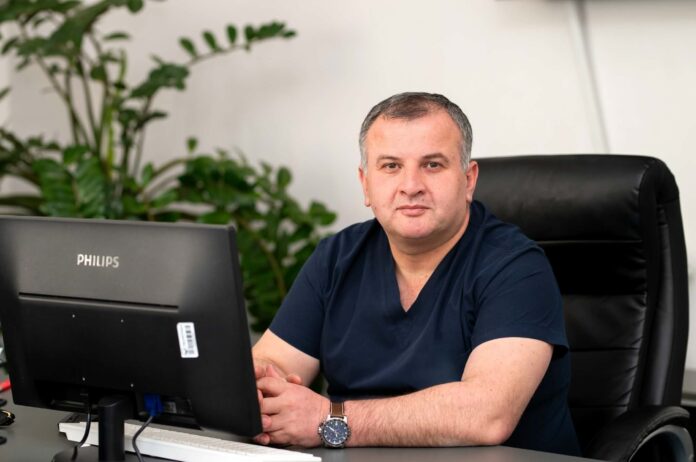
The surgical procedure itself unfolded in Tbilisi, within the clinic’s operating theater. However, the robotic system was commanded remotely by Georgian oncological surgeon Dr. Emzar Nadiradze. Throughout the operation, Dr. Nadiradze was physically stationed in Wuhan, China. Consequently, the physical distance separating the surgeon from the patient spanned approximately 6,000 kilometers.
The patient underwent an ultra-low anterior resection for rectal cancer, a manipulation widely recognized as one of the most technically demanding procedures in colorectal surgery. The operation required navigating the pelvic cavity, an anatomically narrow and exceptionally difficult-to-access space. Alongside the complete extirpation of the tumor, the surgeon’s primary objective was the meticulous, millimeter-level preservation of the local neural structures to prevent any functional deficit.
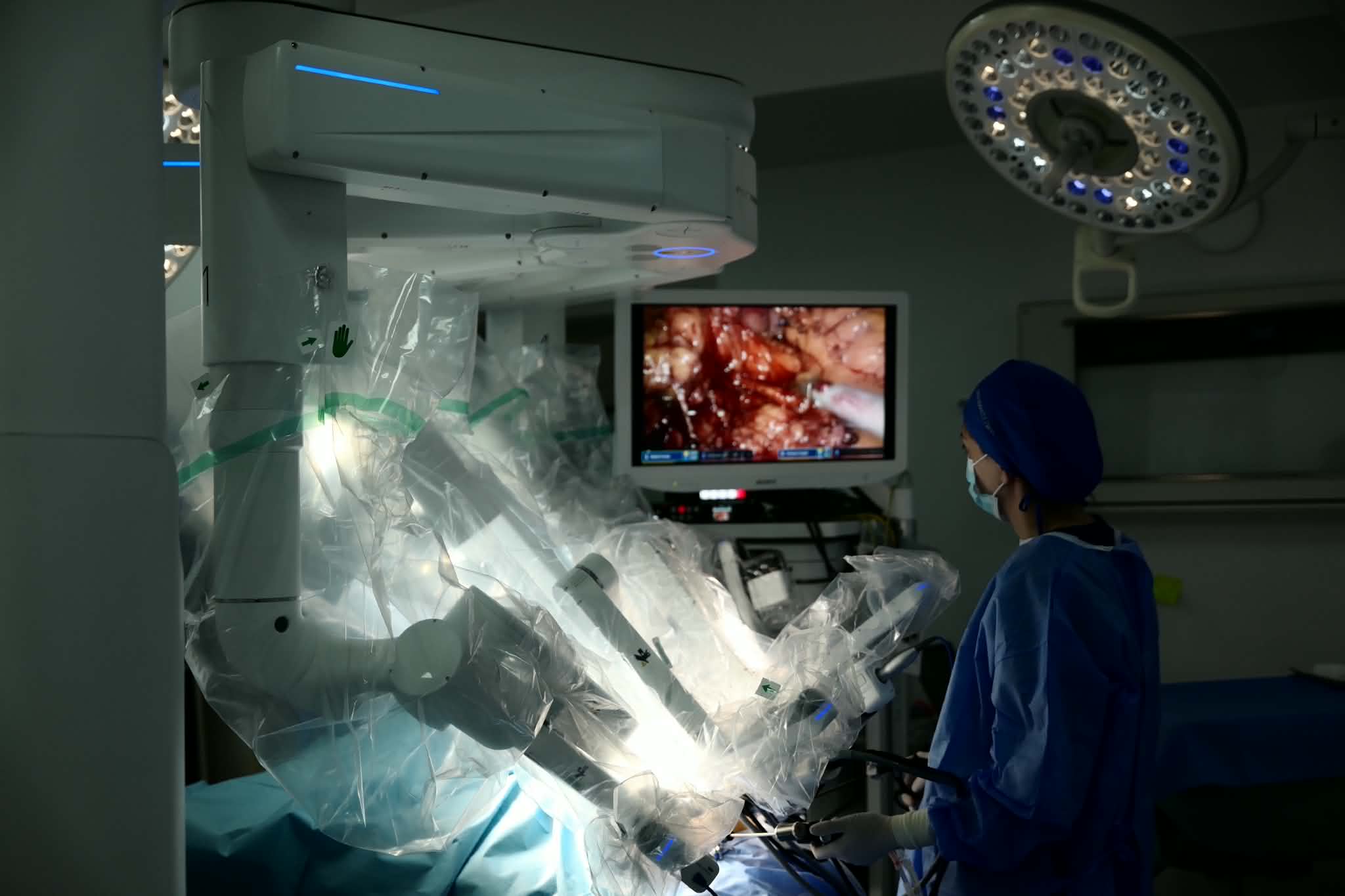
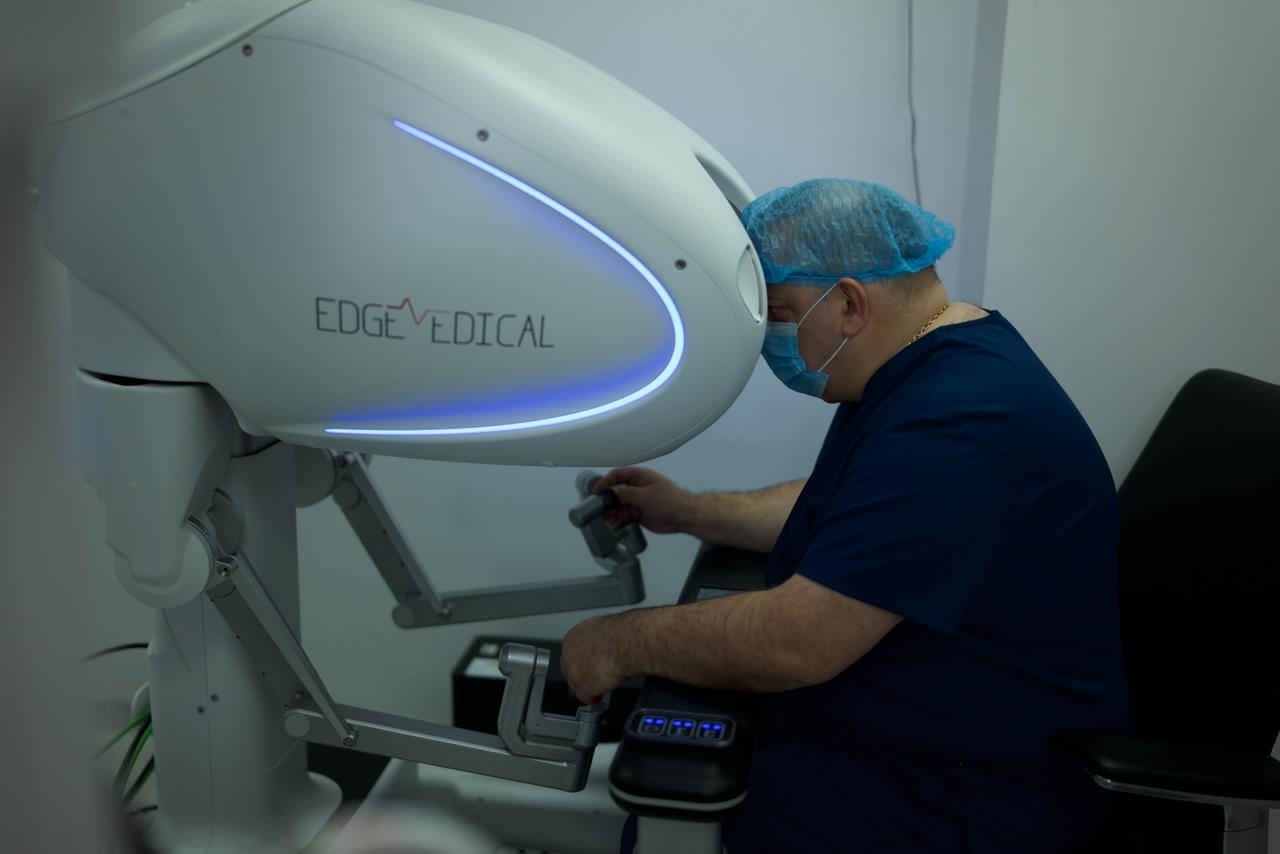
The operation lasted eight hours and thirty minutes. This duration was dictated solely by the patient’s specific anatomy and the inherent complexity of the surgical intervention; the vast distance had zero impact on the operative timeline. Throughout the entire period, the digital connection between Wuhan and Tbilisi remained completely stable and uninterrupted.
Notably, international telerobotic practice is typically restricted to brief, straightforward manipulations. In stark contrast, this milestone demonstrated that given the appropriate clinical expertise, the remote surgical management of anatomically complex malignancies is entirely viable.
The successful execution of this intricate objective was driven by the seamless synergy of a multidisciplinary team. The operative process involved assistant surgeon Dr. Mari Licheli, anesthesiologist-intensivist Dr. Lika Jajanidze, the operating room nursing staff, and the clinic’s IT specialists. Technical and communications infrastructure was guaranteed by partner organizations, including MagtiCom, EDGE Medical, Hospimed Georgia, and Inova.
The lead specialist of the surgical team, oncological surgeon and laparoscopist Dr. Emzar Nadiradze, discusses the technical architecture of this milestone in the interview below. Dr. Nadiradze completed his residency at the Ludwig Maximilian University of Munich and underwent specialized training in robotic surgery in South Korea. He currently chairs the Department of Surgery at the Mardaleishvili Clinic, the nation’s leading oncology center.
An ultra-low anterior resection for rectal cancer is regarded as one of the most formidable procedures in the field. What was the primary rationale behind selecting such a technically complex case for this inaugural remote operation?
Indeed, an ultra-low rectal resection is considered one of the most technically intricate and complex operative interventions, particularly regarding the preservation of natural sphincter function.
The selection of such a complex case was part of a collaborative strategy developed directly with EDGE, the equipment manufacturer. Based on our clinical track record, our partners specifically requested that we undertake a highly challenging case. This was seen as a critical milestone for validating the integration of major surgical interventions into remote workflows.
Generally speaking, global telerobotic practice—including inside China—predominantly involves short procedures of low-to-moderate complexity. The average duration for such remote procedures typically does not exceed three to four hours.
What was the single greatest challenge in operating on a patient 6,000 kilometers away compared to conventional, open, or laparoscopic surgery?
The greatest challenge, irrespective of all the safety protocols implemented, was the immense weight of responsibility for the patient’s health. For me, as a surgeon, the situation was further intensified by the fact that this was the first operation of its kind ever attempted in the Caucasus region. It absolutely had to be a success, and we delivered exactly that. Through this technological milestone, Georgia has secured a prominent position on the global medical stage.
This operation was clearly the product of ideal synchronization across a multidisciplinary team. How did you achieve this level of coordination, and what did the preparatory phase entail?
The preparatory period spanned nearly three months. The primary technical hurdle during this phase was securing an uninterrupted, high-speed internet connection. This was followed by patient selection and a detailed orientation covering every medical and technical nuance of the procedure. However, the patient accepted the proposal very readily, independently researched the necessary information, and placed absolute trust in our team.
Given the success of this precedent, how do you envision the future of remote robotic surgery within Georgia?
The advancement of remote robotic surgery in Georgia is imperative, and we have already taken the definitive first step on this path. This paradigm represents the tomorrow of medicine. It is my sincere hope that our colleagues will actively engage in this domain, which will allow us to manage the most complex surgical cases remotely alongside international specialists. In the future, if a Georgian patient wishes to be operated on by a surgeon based in Germany, this technology will make that asset seamlessly accessible without the patient ever having to leave Georgia.
