


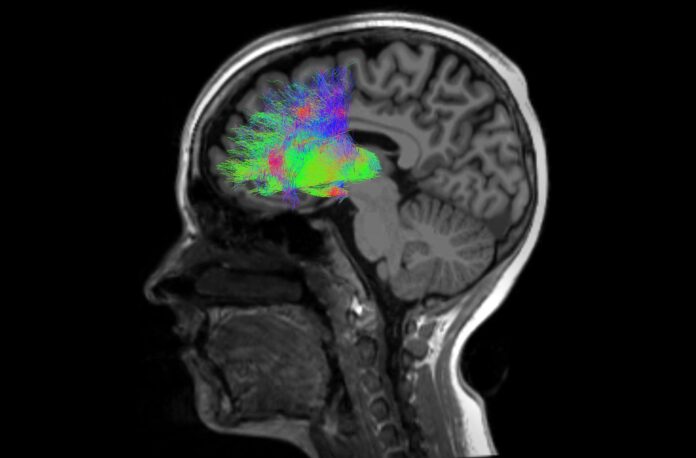
A recent study conducted by researchers from King’s College London, Hammersmith Hospital, and Imperial College may contribute to a new understanding of the neurobiological basis of schizophrenia. The findings, published in the journal Molecular Psychiatry, suggest that individuals with schizophrenia may have reduced levels of iron and myelin in the brain, which allows for the identification of new biomarkers for the disorder.
Schizophrenia is a severe mental disorder characterized by hallucinations, disorganized thinking, delusions, difficulty concentrating, depression, anhedonia, and avolition. All of these significantly impact a person’s life.
Despite extensive research, a complete understanding of its biological and neural basis is still evolving. However, key factors have been established, such as: genetic predispositions, in some cases traumatic brain injuries, an increased risk of substance use, and a lack of white matter in certain areas of the brain.
It is known that iron is essential for healthy brain function, while myelin is a fatty sheath that protects nerve fibers and facilitates the transmission of electrical signals.
For the study, scientists examined the brains of a total of 171 individuals. This included 85 patients diagnosed with schizophrenia and 86 healthy volunteers (the control group). Magnetic Resonance Imaging (MRI) was used to assess the levels of iron and myelin in specific brain regions.
Analysis of the experimental data revealed iron and myelin anomalies in specific brain structures of individuals with schizophrenia, including the caudate nucleus, putamen, and globus pallidus.
The results showed a decrease in magnetic susceptibility and an increase in mean diffusivity. These findings confirm a reduction in iron and myelin content in these brain regions during schizophrenia.
The observed changes were most pronounced in brain regions rich in oligodendrocytes. Since oligodendrocytes are known to use iron for myelin synthesis, the study’s results suggest a link between oligodendrocyte dysfunction and the pathophysiological mechanisms of schizophrenia.
The outcomes of this research lay a crucial foundation for further scientific work aimed at determining the potential role of iron and myelin deficiency in the development of schizophrenia symptoms. In the future, these findings could be used to develop alternative therapeutic strategies for the disease, involving attempts at myelin repair or iron level correction. Scientists also plan to assess these biomarkers in individuals with bipolar disorder and those at risk of developing schizophrenia.
