


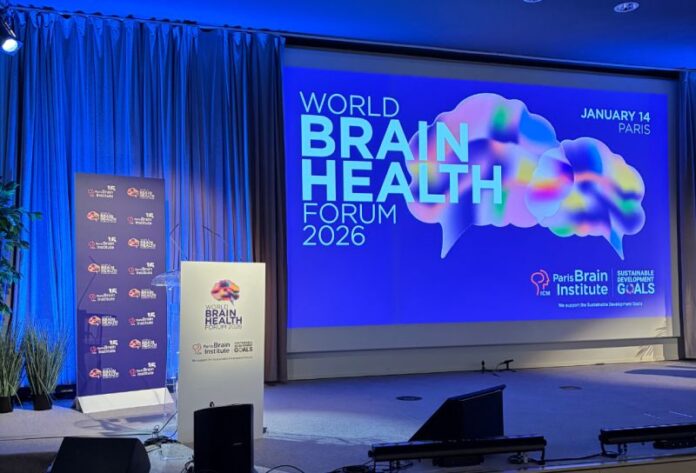
To celebrate the 15th anniversary of the Paris Brain Institute (ICM), the French capital hosted the inaugural World Brain Health Forum. The event served as an interdisciplinary platform, bringing together leading experts in neuroscience, public health, and international policy.
The forum spanned three days across the venues of the Paris Brain Institute, UNESCO, and the French Academy of Sciences (Institut de France). A strategic initiative was presented at the event, aiming to prioritize brain health as one of the primary global challenges of the 21st century and to establish it firmly on the international agenda.
Core Objectives and Global Epidemiology
According to reports presented during the forum, brain health has become one of the most significant biomedical and social challenges of modern times. Official statistics show that one in three people will suffer from some form of nervous system pathology during their lifetime.
Today, neurological disorders are the leading cause of disability and functional limitation worldwide; consequently, this issue demands a fundamental shift in the current state of healthcare systems.
The forum devoted particular attention to the alarming rise in the prevalence of dementia. Projections suggest that by 2050, the number of people living with dementia globally will reach 139 million. This trend is directly linked to an aging population and a lack of effective methods for managing neurodegenerative diseases. Thus, this challenge stood as one of the central themes of discussion.
The forum also highlighted the deteriorating trend of mental health among the youth and working-age population. The increase in mental disorders within the workforce is an acute socio-economic problem. In this context, scientists agreed on a fundamental principle: brain health and mental health must not be separated. They are viewed as different manifestations of the functioning of a single biological organ, requiring integrated approaches to treatment and diagnostics.
Participants noted that the global epidemiological picture directly affects economic indicators. Statistics presented at the forum revealed that, in Europe alone, annual costs associated with brain diseases (including direct medical and indirect social costs) exceed €1,000 billion. This figure clearly indicates that investing in neuroscience and implementing preventive strategies is a necessary condition for global economic stability.
Georgia’s Voice at the World Forum
A key highlight for Georgia was the participation of Professor Aleksandre Tsiskaridze, a neurologist from Tbilisi State University. His speech at the UNESCO hall carried significant weight, both in its academic content and geopolitical context.
The session moderator introduced the Georgian scientist as a specialist holding a unique perspective at the intersection of Europe and Asia, the Global North and South, with a vision for solving challenges in developing countries.
Professor Tsiskaridze spoke extensively about the strategic barriers and opportunities facing Georgia. He emphasized that modern science has long moved beyond the format of isolated laboratories and that success today can only be achieved through large-scale international cooperation. The professor believes that multicenter studies are the only way to obtain precise and reliable scientific results.
According to Professor Tsiskaridze, the best way to stop the “brain drain” is to provide young researchers with opportunities to participate in international projects. If students and residents can engage in global research, they will be able to realize their potential within their homeland and will no longer feel the need to leave the country.
He noted that over the last 15 years, genetics and immunotherapy have completely transformed neuroscience, offering hope for defeating previously incurable diseases. In Tsiskaridze’s view, achieving high-quality results is now only possible through international collaboration, as a single center can no longer manage research of such scale independently.
Jonathan Rosand: A New Standard for Preventive Neurology
One of the forum’s most influential speakers was Professor Jonathan Rosand, a neurologist from Harvard University and Massachusetts General Hospital. He introduced the “Brain Care Score,” an innovative scientific tool designed to establish new standards in preventive neurology.
The professor explained that this model is based on years of epidemiological research and allows for the assessment and minimization of the risk of developing severe neurological diseases at an early stage.
The data presented by Rosand fundamentally changes the paradigm of managing neurological pathologies. Research has shown that 75% of strokes and nearly half (45%) of dementia cases are directly linked to “modifiable risk factors.”
This means that the vast majority of these diseases are preventable if lifestyle and biological indicators are purposefully controlled. Professor Rosand emphasized that the Brain Care Score is a practical tool that helps individuals manage their own neurological health.
The model is based on three main variables:
-
Physical indicators (blood pressure, sugar, and cholesterol levels)
-
Lifestyle (nutrition, physical activity, avoidance of harmful habits)
-
Socio-emotional well-being
During the discussions, Rosand paid special attention to the third component—social connections and stress management. He stated that human relationships and having a sense of purpose or goal in life are as essential for functional brain resilience as medical therapy.
Finally, he highlighted the interconnection between brain health and general bodily health. In his view, the brain is not an isolated organ, and protecting it automatically implies improving the cardiovascular and metabolic systems. Ultimately, the future of neurology lies in active and systemic prevention, which should become the cornerstone of global healthcare policy.
The Molecular Revolution and RNA Therapy: Emanuele Buratti’s Vision
A key speaker in the scientific session was Professor Emanuele Buratti from the International Centre for Genetic Engineering and Biotechnology (ICGEB, Italy).
In his presentation, Buratti touched upon entirely new approaches to managing neurodegenerative diseases based on deep research into molecular pathology. He focused on the cellular mechanisms underlying severe diagnoses such as Amyotrophic Lateral Sclerosis (ALS) and frontotemporal dementia.
The professor spoke at length about the potential of RNA-based therapies, which are considered one of the most promising directions in modern medicine. He explained that, unlike traditional medications that fight symptoms, RNA therapy aims to block the synthesis of pathological proteins or correct genetic errors at the cellular level.
Buratti noted that progress in the stability of nucleic acids and delivery technologies to the brain has made the effective management of once-incurable diseases a reality. A significant portion of his speech was dedicated to protein aggregation processes and their role in neuronal death. He presented the latest data on how molecular markers can be used to diagnose diseases years before their clinical manifestation.
Neurological Education: Elena Moro’s Vision
A prominent figure in the political and social panels was the President of the European Academy of Neurology (EAN), Professor Elena Moro. She emphasized that scientific progress will only be effective if accompanied by strong structural support and unified educational standards at the international level.
Professor Moro spoke extensively on the need to reduce the “Burden of Disease.” In her view, this burden primarily encompasses the decline in patients’ quality of life, the psychological state of family members, and social isolation.
Her vision for tackling this challenge involves a unified European educational space ensuring equal quality of neurological services across the continent. She also emphasized the role of advocacy, noting that the neurological community must work more actively with decision-makers and governments to make brain health a national health priority and to eliminate social stigma.
Key Takeaways of the Forum
The World Brain Health Forum established neuroscience as a global political priority. Experts emphasized that neurological disorders are the leading cause of disability worldwide, with the economic burden exceeding one trillion euros annually in Europe alone.
The scientific community agreed that the separation between brain and mental health is a thing of the past; the solution lies in preventive neurology and innovations like RNA therapy.
For Georgia, Professor Aleksandre Tsiskaridze effectively represented the country’s interests, focusing on full integration into the international scientific network. This partnership will provide Georgia with direct access to the latest medical technologies, allowing the country to utilize neuroscience achievements for the well-being of its population and sustainable development.
