


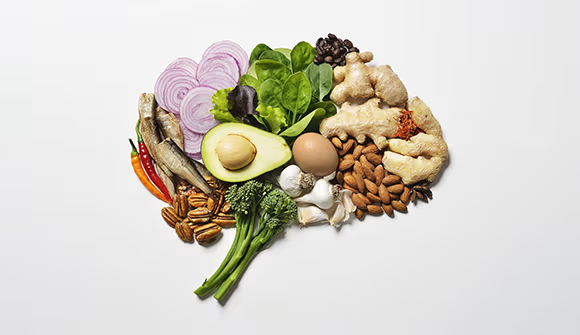
According to a new scientific review, the connection between teenage diet and mental health may be much stronger than previously thought. Researchers from Swansea University analyzed 19 studies and concluded that a healthier diet is frequently linked to fewer depressive symptoms, while poor-quality nutrition is associated with higher levels of psychological distress.
The research demonstrated that individual vitamins or supplements are not the most critical factor. Instead, a clearer connection emerged with overall dietary patterns. In other words, it is not just about whether a teenager consumes a specific nutrient, but rather the overall picture of their daily diet—what they eat regularly, how balanced their menu is, and the quality of the products they consume.
The researchers reviewed both randomized controlled trials and long-term observational data. Results regarding the effects of individual supplements, such as Vitamin D, proved to be inconsistent. In contrast, healthy and balanced dietary patterns were more steadily linked to better mental states. This suggests that the problem and its potential solution should not be sought in one specific element.
Adolescence is one of the most crucial stages for brain development and emotional formation. Many habits formed during this period persist into the future. Therefore, nutrition is particularly noteworthy: it is a daily factor that can actually be changed and can have a broad impact on public health.
Nevertheless, researchers emphasize that existing evidence is not yet perfect. The link between nutrition and mental health may be influenced by social status, gender, and other circumstances. Furthermore, a large portion of the studies focuses primarily on depression, while anxiety, stress, self-esteem, aggression, and behavioral problems have not yet been adequately studied.
For this reason, scientists are calling for more precise and standardized research in the future. In their view, it is essential to better understand which specific dietary patterns help adolescents the most and for which groups this impact is particularly significant.
In short, the main message of the study is simple: teenage mental health does not depend solely on emotions, the social environment, and hormones. Their daily diet may also play a vital role. Therefore, discussing adolescent nutrition is no longer just a matter of weight or physical shape—it is a matter of mental well-being as well.
