


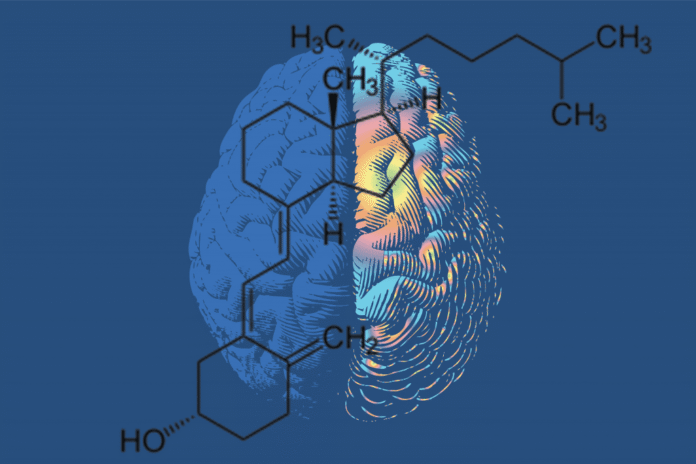
In recent years, intensive research has been conducted in the field of Alzheimer’s disease prevention and the study of early pathological changes. One of the latest studies, carried out by researchers at the University of Galway, suggests that vitamin D may play a significant role in maintaining brain health.
According to the study findings, higher levels of vitamin D in midlife are associated with lower levels of one of the key biomarkers of Alzheimer’s disease — the tau protein — later in life. Tau protein is a pathological protein that accumulates in the brain and plays a crucial role in the development of neurodegenerative processes.
The study included approximately 800 participants, whose average age at baseline was 39 years, and none of them had dementia at the start of the research. At the initial stage, participants’ vitamin D levels were measured in the blood. Approximately 16 years later, they underwent brain imaging, which allowed researchers to assess the levels of both tau and amyloid-beta proteins.
The results demonstrated that individuals with higher levels of vitamin D had lower accumulation of tau protein in the brain. At the same time, no significant association was found between vitamin D levels and amyloid-beta.
The researchers emphasize that these findings reflect an association rather than a causal relationship. Therefore, it is not yet possible to conclude definitively that vitamin D directly reduces the risk of developing Alzheimer’s disease.
It is also noteworthy that midlife may represent a critical period during which the control of modifiable risk factors — including vitamin D levels — can have a significant impact on brain health later in life.
According to the authors, vitamin D can be considered a modifiable risk factor, meaning that it is a factor that can be regulated. However, further research, particularly clinical studies, is necessary to determine whether optimizing vitamin D levels can actually reduce the risk of developing dementia.
In conclusion, this study once again highlights the importance of lifestyle factors in maintaining brain health. Although vitamin D is not a treatment for Alzheimer’s disease, maintaining optimal levels may be an important factor in its prevention.
