


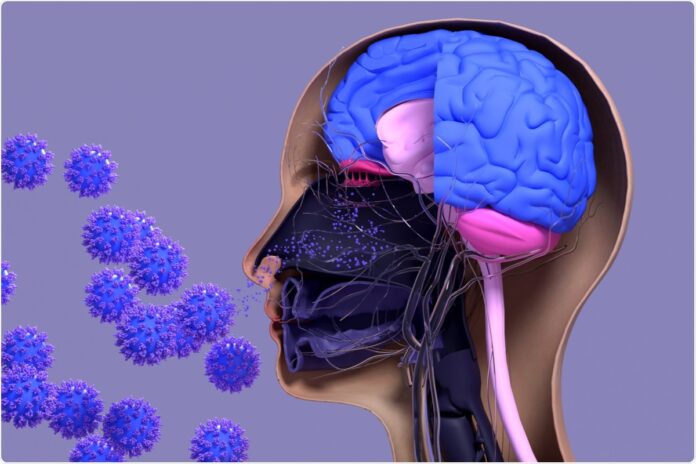
Millions of individuals worldwide who have recovered from COVID-19 still experience a post-infection difficulty: the loss of the sense of smell (anosmia) or distorted perception (dysosmia). This set of symptoms, known as Olfactory Dysfunction (OD), clearly highlights the virus’s significant, but less studied, impact on the central nervous system.
The latest research by the interdisciplinary COVIDOM team, published in Scientific Reports, has shown how COVID-19 affects the amygdala—a brain structure critical for processing olfactory information and emotional responses. These findings offer new knowledge about why olfactory dysfunction persists months after infection and may determine the future of therapeutic approaches for Post-COVID Syndrome (Long COVID).
Anosmia was one of the earliest and most clinically noticeable symptoms of the COVID-19 pandemic. The majority of patients recovered their olfactory function within a few weeks, but a significant portion experienced this olfactory disorder for months or even longer. This dysfunction can seriously impact the quality of life, as it leads to a reduction in the pleasure derived from food and negatively affects overall psycho-social well-being.
Study Details:
The study involved 61 participants from the COVIDOM cohort, who were divided into two groups: individuals with olfactory dysfunction (post-COVID OD) and a control group of those who had fully recovered their sense of smell.
Using DTI (Diffusion Tensor Imaging) and high-resolution MRI, the researchers assessed the white matter tracts in neuroanatomical structures involved in processing olfactory signals: the amygdala, piriform cortex, and putamen.
According to the study, the measure of Fractional Anisotropy (FA) (which reflects the density and organization of nerve fibers) was significantly increased in the left amygdala of individuals with olfactory dysfunction (OD) compared to the control group. An increase in FA usually indicates enhanced myelination or better fiber organization of the nerve fibers. This may be a sign of compensatory neuroplasticity (brain adaptation) that follows the loss of smell.
However, interpreting this change is complex: it may reflect adaptive mechanisms that strengthen communication between the amygdala and the ventromedial prefrontal cortex—a region that controls emotions and anxiety. This is supported by a negative correlation between the FA scores and the levels of anxiety/depression (assessed by the GAD-7 and PHQ-8 scales): the more intact and organized the amygdala’s white matter, the less pronounced the psychiatric symptoms.
On the other hand, Radial Diffusivity (RD) scores (which assess the integrity of the myelin sheath) were also found to be increased in the right amygdala of the olfactory dysfunction (OD) group. An increase in RD is traditionally linked to damage to the myelin sheath or demyelination.
However, given that the study only included non-hospitalized patients with mild symptoms, the researchers hypothesize that this is not a sign of classical neurodegeneration. Instead, this change may reflect a microstructural remodeling specific to post-COVID olfactory disorder.
Moreover, the measures of Mean Diffusivity (MD) and Axial Diffusivity (AD) in the left amygdala revealed a positive correlation with the duration of olfactory dysfunction. This means that the longer the olfactory problem lasts, the more the microstructural changes in the nerve fibers of this region progress.
The amygdala, which is primarily connected to the olfactory cortex and has a close connection with the piriform cortex, is crucial for processing olfactory information. A change in these diffusivity metrics may disrupt the flow of information in the olfactory and emotion-regulating neural circuits. This disruption is likely the cause of the affective (emotional) and sensory symptoms observed in “Long COVID.”
Overall, these changes indicate a complex interplay of adaptive and potentially damaging alterations in the micro-structure of the amygdala’s white matter after infection with the SARS-CoV-2 virus. These findings underscore the amygdala’s vulnerability and its neuroplastic response to prolonged sensory deprivation (loss of smell).
Understanding the cerebral changes that cause olfactory dysfunction (OD) is critically important for developing targeted therapeutic interventions. The study results refine the neuropathological basis of prolonged olfactory disorders, thereby facilitating the implementation of new diagnostic methods and treatments.
Source: nature – scientific reports
