


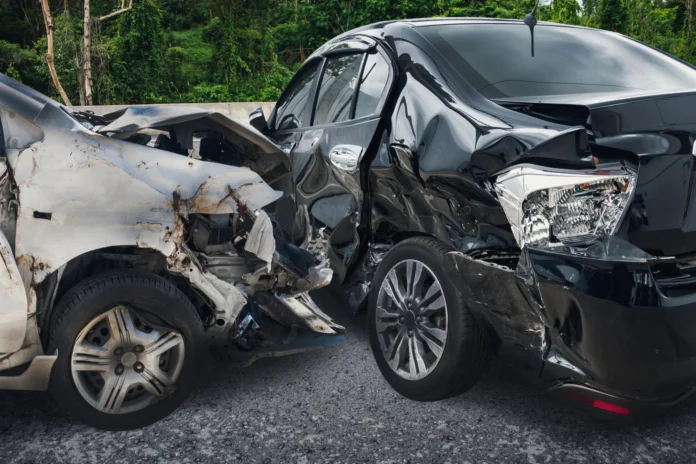
According to 2025 statistical data, 469 people died as a result of traffic accidents in Georgia, which is the highest figure since 2018. Pedestrians (33%) and children account for a significant portion of the lethality. It is a sad fact that in most cases, we are dealing with driving under the influence or other gross violations of traffic rules. Beyond the issue of collective self-awareness and responsibility, our primary topic is the stages of healthcare an injured person goes through, whose timely assistance and rescue are still possible.
In many cases, the tragic outcome of road accidents in Georgia is not solely the result of the legal violation itself. For instance, in Tbilisi, where traffic congestion is a constant problem, an emergency medical team may fail to reach the scene in time, which directly impacts the viability of the victims. Another pressing issue is the desire of citizens to provide rapid assistance, which may result in further secondary trauma. To discuss this topic, Medscriptum contacted and spoke with Dr. Nikoloz Kvachadze, Head of the Anesthesiology and Intensive Care Service at the Simon Khechinashvili University Hospital.
What path does the injured person take before the arrival of the emergency medical team? What should ordinary citizens know if they are the first at the scene and wish to help?
The first few minutes that a patient passes from the occurrence of a road accident until the arrival of the ambulance are crucial. It is redundant to talk about self-help on the part of the injured, especially when dealing with trauma and a severe road accident in general. First and foremost, our citizens always have a desire to help, and I would say that there is a fairly high level of civic awareness and culture in Georgia in this regard. Personally, I have never witnessed a road accident where at least five cars did not stop with the desire to provide assistance, which is very good; however, the second issue is how we can actually provide this help. Every citizen should remember two things: first, call 112, and second, prioritize your own safety first, and only after that try to help. But even this requires skill, as often the vehicle body is so deformed that it is impossible to open it without proper equipment. Another matter is whether a person has the appropriate knowledge, as it is visually very difficult to distinguish whether a body part is trapped or an internal organ is damaged. Therefore, I would say that even timely notification of the relevant authorities, cordoning off the area, or quickly bringing a fire extinguisher to the scene already yields a massive positive result. The second issue is how we can physically assist, because in cases of severe trauma, incorrect movement of the patient—when we do not know exactly what is damaged—can cause more harm than good. Such knowledge is possessed by employees of the fire and rescue service, the military, or representatives of the patrol police; safe action is possible specifically under their direction.
What is the specific role of medical workers in managing such cases, and what challenges might they face?
Inside the emergency resuscitation vehicle, active management of the patient begins, known as PHTLS (Pre-Hospital Trauma Life Support). This involves immobilization, as well as the detection, correction, and stabilization of injuries whose complications could quickly become life-threatening but are simultaneously preventable. For example, airway obstruction, tension pneumothorax, management of hemorrhagic shock (which often requires active pharmacological support), or complications caused by traumatic brain injuries. This is a process that continues within the clinic itself, as there are many reasons why a patient might die after being transported alive to the facility. This statistically aligns with international data. Among the causes of mortality, the most frequent is craniocerebral trauma, followed by hemorrhagic and circulatory collapse, thoracic trauma, and finally polytrauma. Therefore, the difficulties medical personnel may encounter with a patient brought to the clinic depend heavily on the path taken and how they were managed from the scene to the clinic. An emergency team brings the patient relatively stabilized and already immobilized, but if we are dealing with “self-flow” (uncoordinated transport), we may have to receive a patient whose condition worsened on the way. In that case, the role of stabilization and immobilization shifts to the emergency department personnel, who should generally have all the resources to handle such cases. The main thing is that the damage is not largely incompatible with life and that those “golden seconds,” so vital for human life, are not lost between the accident and arrival at the clinic.
Systemic Challenges—is there a “weak link” in this healthcare chain from the scene to the hospital bed?
A weak link, of course, exists, but first I would say that systemically, it is more or less well-distributed in terms of how quickly the emergency team will react and where the injured person will be transported. Of course, there are flaws in our healthcare system; no system is flawless, especially when dealing with such a sensitive topic where every second is vital and precious. Due to the country’s terrain and transport dynamics, certain sections are difficult to access, both in the regions and in the capital itself, where slightly different problems exist. Perhaps the biggest challenge is the development of so-called “black zones”—places where the arrival of medical personnel is delayed due to their absence in those vicinities. However, it should be noted that much is being done and great effort is being spent to cover such zones and minimize patient transport time. For example, we can cite the emergency centers and the constantly ready resuscitation vehicles stationed directly by the roadside in the Shekvetili or Boriti sections. Even in high-mountain regions, along with the active development of tourism, this system is being greatly refined, as much more is being done for the timely assistance of trauma patients.
A road accident is not just a tragedy caused by a single moment; it is the result of a process that begins with the disregard of rules and continues through every stage of response. When we lost 469 lives in 2025, this is not just a statistic—it is hundreds of families, hundreds of stories, hundreds of interrupted futures. Especially when a high proportion of the deceased are pedestrians and children, the issue moves beyond individual error and becomes a social responsibility. However, despite the tragedy, the most important thing is that a road accident does not always mean inevitable death. The recovery process begins from the very first seconds: with a timely call to 112, ensuring the safety of the scene, refraining from incorrect movement, and knowing basic first aid, the popularization of which is essential in the country. A road accident is a context where prevention and timely medical intervention are inseparable sides of the same coin. If we can strengthen both individual and systemic responsibility, each following year will no longer be worse than the last, but a stage where the number of lives saved will only increase. Every saved patient is evidence that the right response at the right time truly changes everything.
