


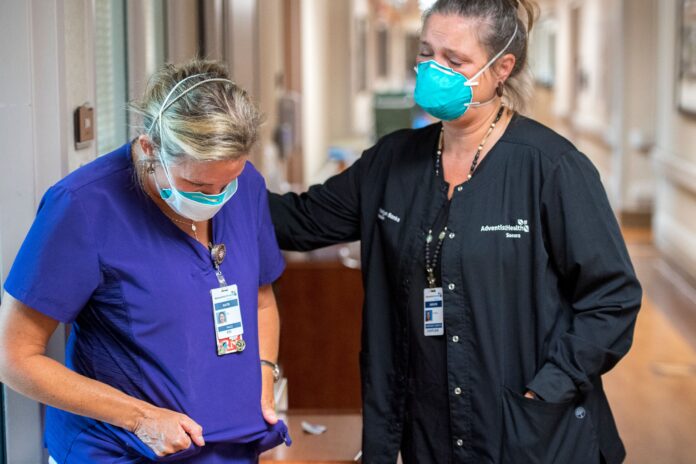
If we were to talk about the health of nurses, the conversation would take on a very grim character. And that’s precisely why we avoid it. And who is saying this? For some reason, when it comes to discussing the problems of this profession, it seems as though everyone knows everything. Georgia is like that—everyone knows everything, but talking about it is unpleasant because something would have to change, someone would have to be held accountable, and yes, someone’s pocket might even have to be slightly affected if necessary. Yet, when it comes to the problems of nurses, everyone remains silent. “Nurses’ Club”: Rule number one—we do not talk about nurses’ problems; Rule number two—we do not talk about nurses’ problems. And indeed, no one speaks about the underappreciated and—let’s be realistic—physically and mentally unfriendly labor and the work performed by these essential workers for the country.
It wouldn’t be difficult for me to provide the reader with results from various international studies—for example, that one-third of nurses in Europe struggle with depersonalization and emotional exhaustion.
-
That 45% experience chronic burnout.
-
That the risk of depression is seven times higher among them.
-
That 71% are under chronic stress.
-
That they have high rates of sleep deprivation, elevated mean arterial pressure, high cortisol levels, musculoskeletal problems, and believe me, the list could go on and on.
But all of this is from Europe, where there is at least a readiness, if not the luxury, to conduct research on this issue and fight these problems. If it weren’t so, different countries certainly wouldn’t allocate such vast financial resources to study this topic.
And what is happening in Georgia? In Georgia, the situation is somewhat different. A similar situation [as in Europe] might exist here if, for example, there were 2 patients per nurse instead of 5 or more, as is the case here. Such a situation might exist if, for instance, the doctor-to-nurse ratio was 1:4 and not 1:1 or even less in favor of doctors. Even these numbers translate into much more and heavier physical work performed by nurses, and this will inevitably have a negative impact on people’s health sooner or later.
Below, I will try to speak at least briefly about all the problems that, over time, inevitably affect the overall health of nurses negatively.
Sleep Deprivation It is no secret that cellular restoration occurs during sleep, and this is one of the most vital components for our healthy physiological functioning. Unfortunately, among nurses, sleep deprivation is chronic. Let’s take the most standard nursing schedule as an example and forget the fact that most nurses have to work two jobs due to the meager salaries offered by clinics. A 24-hour shift once every four days is a direct hit to one’s health. During this time, you are essentially active throughout and only get the chance for a four-hour sleep if you share the night with a partner—but often, you sleep much less. The reason is that your circadian rhythms—simply put, your sleep-wake cycle—have long been disrupted, or the fact that patient admissions are often particularly high at night; therefore, there is often physically no time for sleep in the clinic. Either way, over the years, you seemingly get used to this schedule, but sleep deprivation still takes its toll: a high risk of dementia, high risk of cardiovascular diseases, immune system issues, neurological disorders, chronic inflammatory processes in the body, mood changes, constant fatigue, and many other subsequent events. And only now, remember that most of these people do this every other day.
Hormonal Imbalance Against the Backdrop of Unhealthy Nutrition Even in office work, it is difficult to eat healthily. But if we imagine an unstable workplace with constant tension and the obligation to be at the post throughout the entire day, we get the job of a nurse. Let’s be realistic: staff working in clinics in Georgia certainly do not eat well. This has many reasons: ridiculously low salaries, which often lead to the consumption of low-quality food (roughly, food quickly grabbed from a shop or bakery), and a lack of time, which simply excludes the possibility of eating calmly at the same time of day. We get an unbalanced diet in people who, for the most part, have to eat like this every other day. Over time, this manifests as serious problems: gastric ulcers, mineral deficiencies, and most importantly, hormonal imbalance, a high risk of prediabetes or even diabetes, changes in thyroid function, constant lack of energy; and we face the fact that, unfortunately, today many Georgian nurses suffer from excess weight gained in an unhealthy way. The latter is one of the primary risk factors for cardiovascular system disorders.
Musculoskeletal System Problems Unfortunately, in the minds of many people, nursing is associated only with administering medicine and giving injections, which, of course, is not the case. In most clinics, moving patients from bed to bed, taking patients to and from examinations, carrying heavy objects, and caring for unconscious patients (hygienic work, changing sheets) and many physically demanding tasks are the nurse’s responsibility. Statistically, 60-90% of nurses encounter musculoskeletal system problems during their careers. Of these, 40-60% suffer from this within the very first year of starting work. It is not surprising that back pain and spinal problems are common occurrences among nurses. Cases of spinal herniation and scoliosis are particularly frequent. This problem is so widespread that, according to every nurse we interviewed, every second colleague of theirs suffers from spinal hernia problems.
Risk of Infections No matter how strong the clinic’s internal rules regarding hygienic norms are, nurses are always at the highest risk of contracting infectious diseases from patients, as they have the most frequent physical contact with them. For example, the COVID period is enough, when most nurses were infected with the virus early on. Statistically, 50-80% of nurses have been pricked by a used needle at least once during their work activity, which significantly increases the risk of HIV infection, and Hepatitis B and C.
Psychological Problems Numerous severe cases, human tragedies, fear of the future, constant stress and tension, and frequent insults from patients inevitably leave a mark on the human psyche. Loss of motivation, emotional exhaustion, post-traumatic syndrome after many “crazy” nights, mood deterioration, signs of depression—we must agree that the work environment has a huge impact on a person’s psychological health. It is unfortunate that there is also frequent belittling of the nursing field by doctors. Consequently, for the people representing this field, it is often down to luck whether unworthy treatment from superiors will be added to all the aforementioned problems, or if they find themselves in a collective where labor is at least respected and everyone is accepted as a team member. Unfortunately, the negative attitude of superiors often leaves a huge psycho-emotional scar, especially on young and novice nurses who are just learning and look up to these people as a ray of hope and an example. Such traumas will inevitably manifest negatively in the future.
A dignified working environment is a fundamental social right of human beings. Until we fully realize the needs of nurses—the most vital technical element of the healthcare field—talking about the future of Georgian healthcare will be laughable. Let us not forget the words of the Canadian writer and nurse Tilda Shalof: “A country is only as good as the way it treats its nurses.”
