Parotid gland tumors represent the most common pathology among salivary gland neoplasms. They are characterized by high histological diversity and a close anatomical relationship with the facial nerve, which renders their treatment particularly challenging. Consequently, the surgeon must constantly balance oncological radicalism with the preservation of facial nerve function.
When discussing parotid gland tumors, we occasionally refer to the “rule of 80s”: approximately 80% of all salivary gland tumors develop in the parotid gland, about 80% of these are benign, and 70–80% of benign tumors are pleomorphic adenomas. Parotid gland cancer is relatively rare, accounting for approximately 1% of all malignancies.
The most common benign tumors are pleomorphic adenoma and Warthin’s tumor. Among malignant neoplasms, mucoepidermoid carcinoma is the most prevalent, with its low- and intermediate-grade forms being associated with a quite favorable prognosis. The remaining malignant forms are mostly characterized by high aggressiveness; these include adenoid cystic carcinoma, acinic cell carcinoma, carcinoma ex pleomorphic adenoma, adenocarcinoma, and squamous cell carcinoma.
Clinically, patients most frequently present with a painless, slowly growing mass. Malignancy may be indicated by pain, rapid growth, skin infiltration, regional lymphadenopathy, and especially partial or complete facial nerve paresis. Ultrasound examination and fine-needle aspiration cytology (FNAC) constitute the initial stages of diagnostics. MRI and CT are utilized to evaluate local and regional extension of the disease.
Surgical intervention represents the contemporary standard of care for benign tumors. While tumor enucleation was widely practiced in the past, subtotal superficial parotidectomy—or total parotidectomy when necessary—is currently preferred due to the high recurrence rates associated with enucleation.
The cornerstone of malignant tumor treatment is surgery. The primary objective is complete tumor excision with negative resection margins. The extent of surgery depends on tumor size, localization, histological type, and stage of extension. An organ-preserving approach is feasible for small, low-aggressive tumors, whereas locally advanced disease frequently necessitates total parotidectomy. In cases of clinically positive lymph nodes, therapeutic neck dissection is performed, while the necessity of prophylactic dissection in N0 patients remains a subject of ongoing debate.
Postoperative radiotherapy plays a crucial role in high-risk malignant tumors. Its utilization is recommended in the presence of high-grade, large tumors, positive or close resection margins, perineural invasion, and lymphatic metastases. The role of systemic treatment remains limited and is considered only in select cases.
In parotid gland surgery, particular emphasis is placed on facial nerve protection. The facial nerve (cranial nerve VII) passes directly through the parotid gland, and its identification during surgery constitutes one of the surgeon’s primary objectives. Nerve injury leads to functional impairment of the facial mimic muscles, difficulty in complete eye closure, as well as speech and eating difficulties, which significantly diminishes the patient’s quality of life. Therefore, one of the core principles of contemporary parotidectomy is the maximum preservation of the facial nerve in all instances where it is not directly infiltrated by the tumor.
For many decades, facial nerve identification relied solely on anatomical landmarks and the surgeon’s experience. Following the successful implementation of recurrent laryngeal nerve monitoring in endocrine surgery, interest emerged in applying similar technology to parotid gland surgery. Intraoperative neuromonitoring was developed precisely for this purpose and is currently becoming increasingly widespread during parotidectomy.
Intraoperative neuromonitoring enables the surgeon to perform electrical stimulation of the nerve and receive instantaneous information regarding its location and functional state. This is particularly crucial in complex cases, large tumors, revision surgeries, or altered anatomy.
Facial nerve injury is the most significant complication of parotidectomy. According to available literature data, the incidence of transient paresis ranges between 10% and 40%, while permanent paresis develops in 2–7% of cases. For many years, studies evaluating the advantages of neuromonitoring yielded conflicting results, primarily confirming a reduction only in transient paresis.
A major milestone was reached in 2025, when a large-scale meta-analysis conducted at the University of California (Sacramento) demonstrated that intraoperative neuromonitoring reduces the risk of developing both transient and permanent facial nerve paresis by more than 50%.
Between 2022 and 2026, our team performed 37 parotidectomies utilizing intraoperative neuromonitoring, including 28 for benign and 9 for malignant tumors. Transient facial nerve paresis was observed in 9 patients (24%), and in 7 of these cases, only partial paresis of the marginal mandibular branch was recorded. Facial nerve resection was required in only one patient due to direct tumor invasion into the nerve.
Based on currently available evidence, it can be stated that intraoperative neuromonitoring facilitates nerve identification, reduces the technical complexity of the operation and surgeon stress, and likely decreases the incidence of both transient and permanent paresis. Particularly significant benefits are observed in complex and revision surgeries. Nevertheless, sufficient evidence is still lacking to confirm that it is equally effective across all types of parotidectomy or that it improves oncological outcomes. Consequently, there is an active ongoing discussion regarding whether intraoperative facial nerve monitoring should become the gold standard for parotidectomy.
The successful treatment of parotid gland tumors does not conclude with surgery alone. The biological diversity of the disease and the potential for late recurrences necessitate long-term, individualized follow-up, while the goal of contemporary surgery is not only to improve oncological outcomes but also to maximize the preservation of the patient’s quality of life.
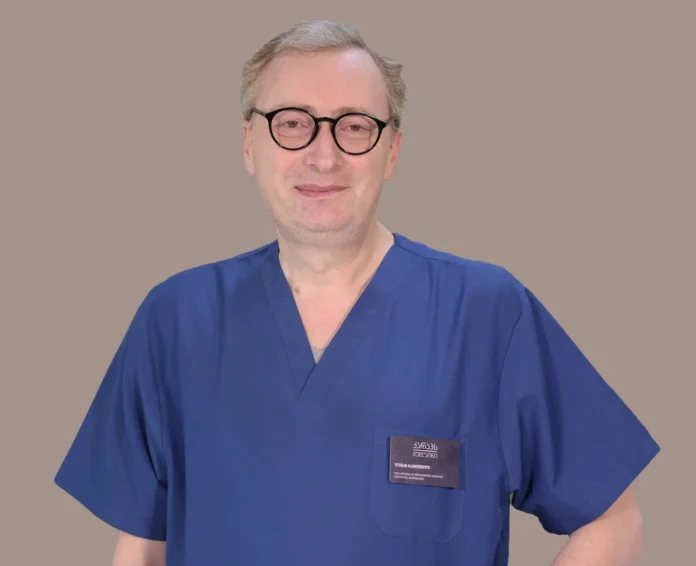
Author: Levan Ramishvili, Professor — Head and Neck Surgeon, Oncologist; Head of the Endocrine Surgery Department at “Caraps Medline” Clinic.